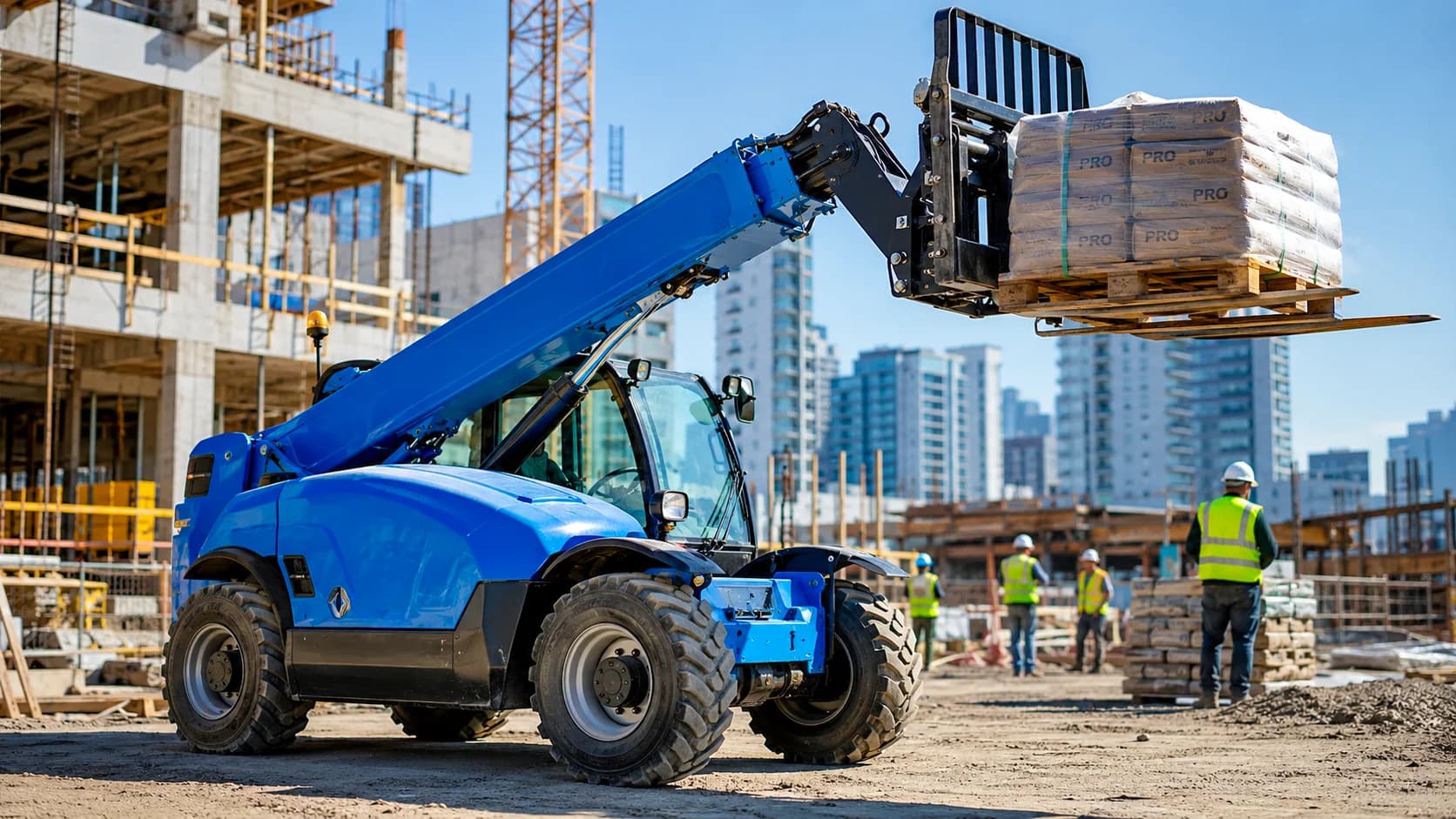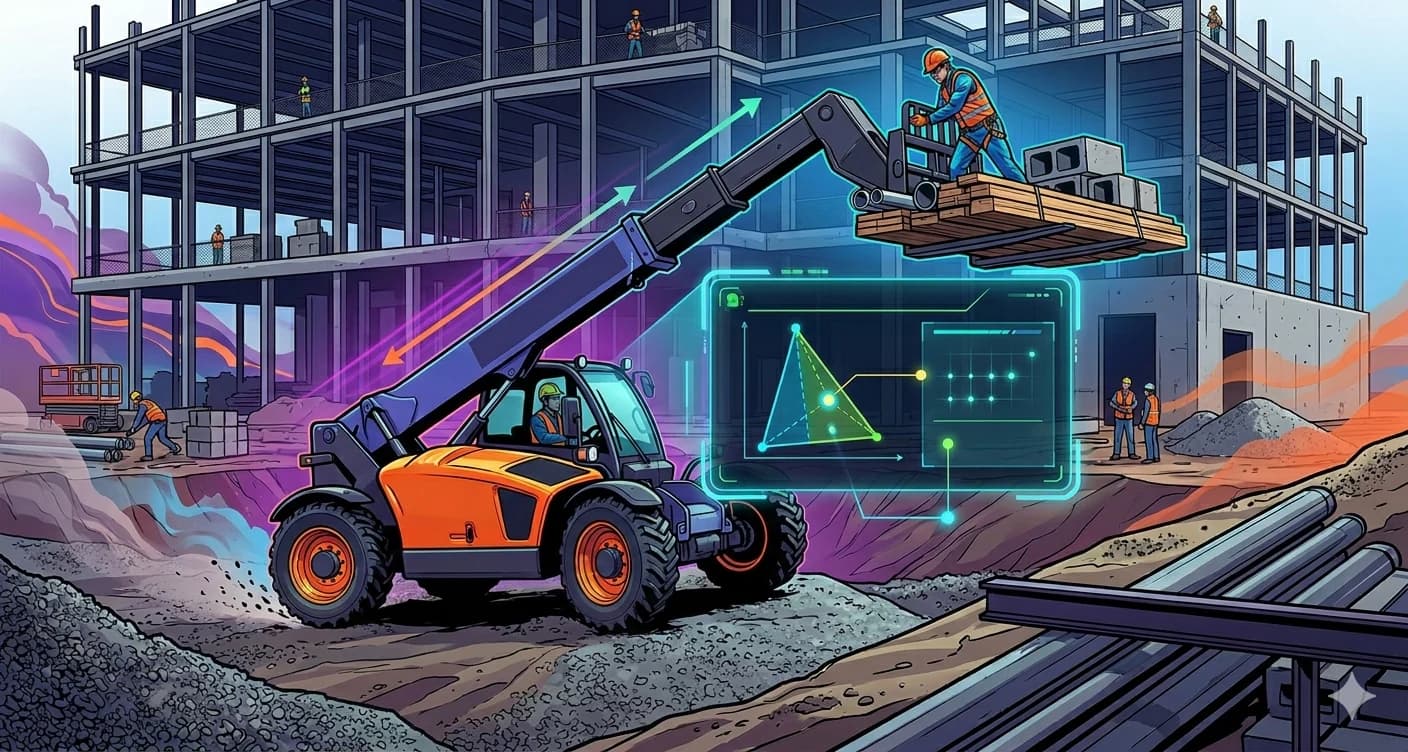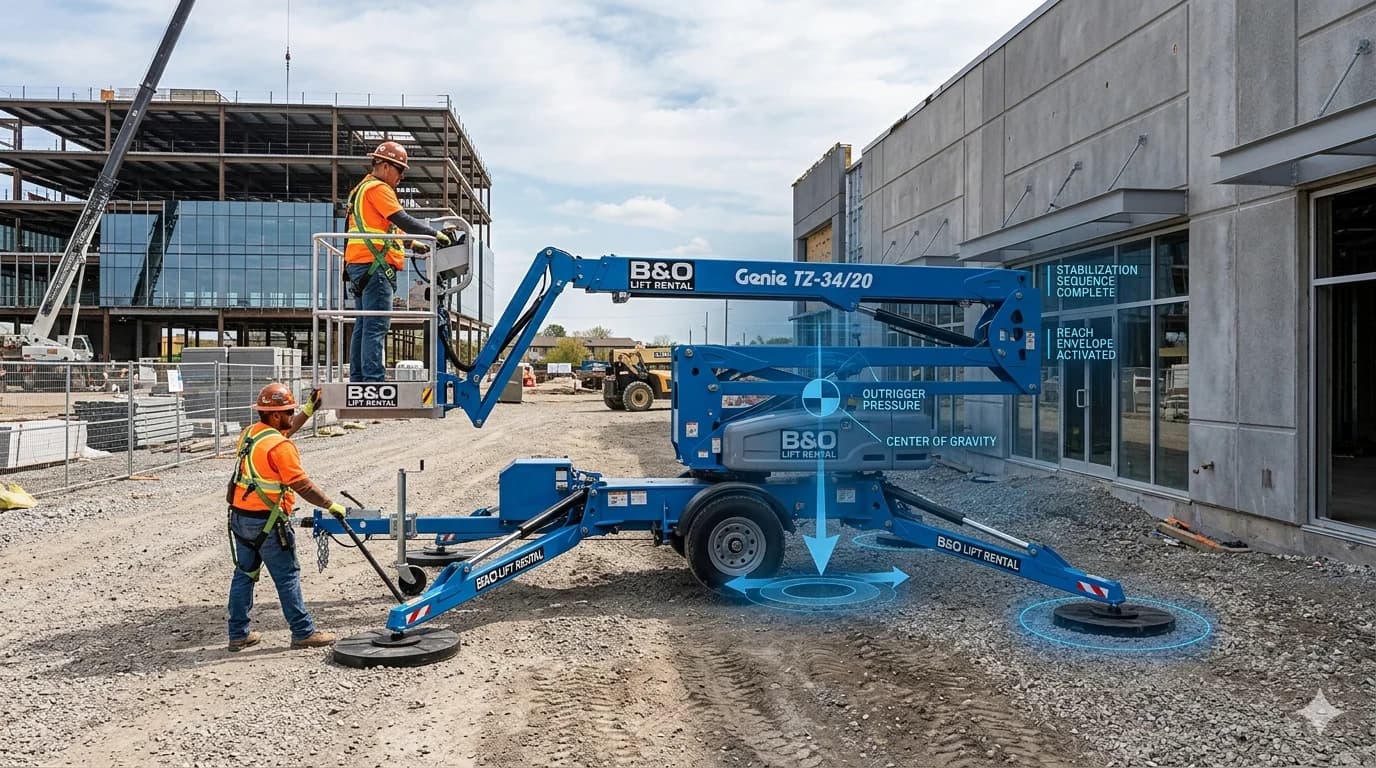
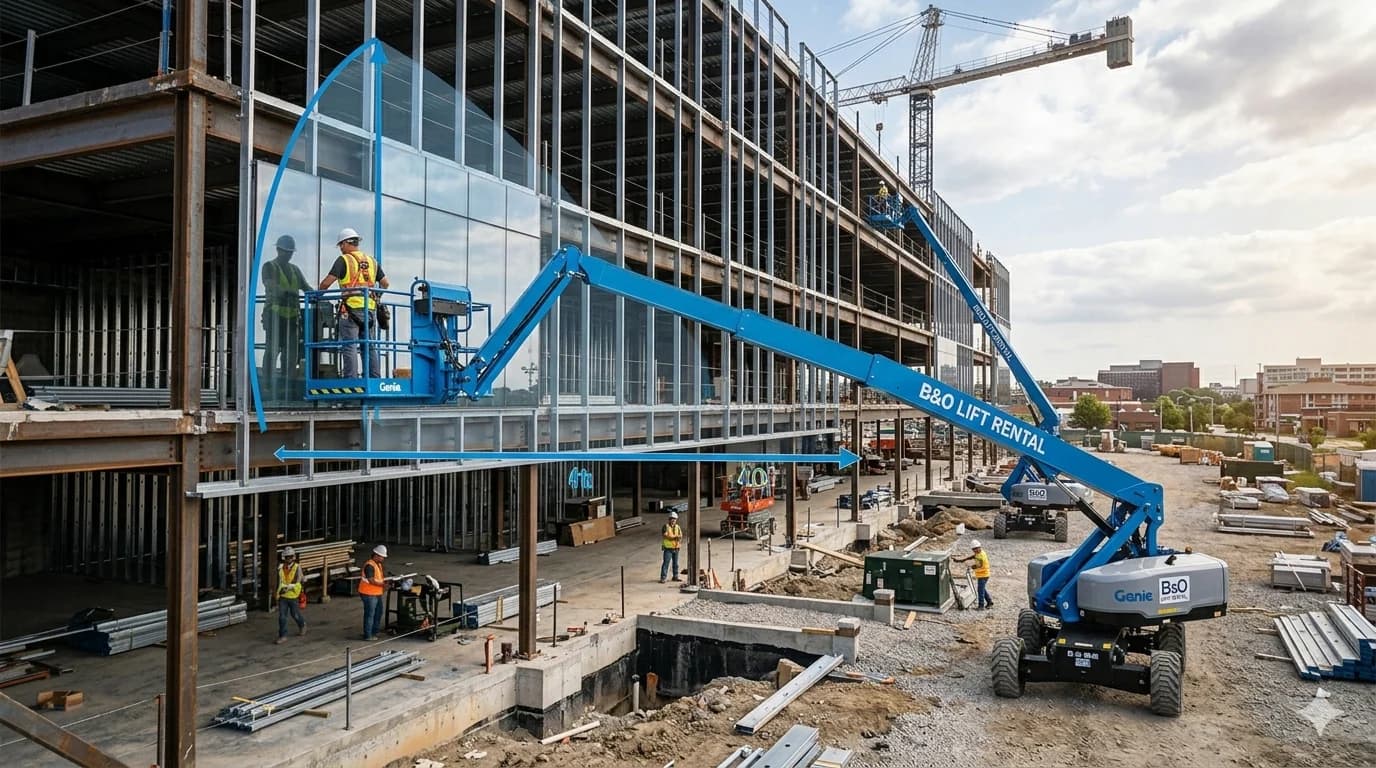
When a project requires access beyond straight vertical height, a boom lift becomes your best bet. On sites that are actively under construction, understanding the difference between horizontal and vertical reach helps every construction worker choose equipment that improves access, reduces repositioning, and supports safer workflows at height.
Unlike scissor lifts, boom lifts are designed to extend both upward and outward, thus making reach strategy just as important as maximum height. Let's review some considerations you need to be aware of when choosing the best possible boom lift for your project:
Understanding Vertical Reach in a Boom Lift
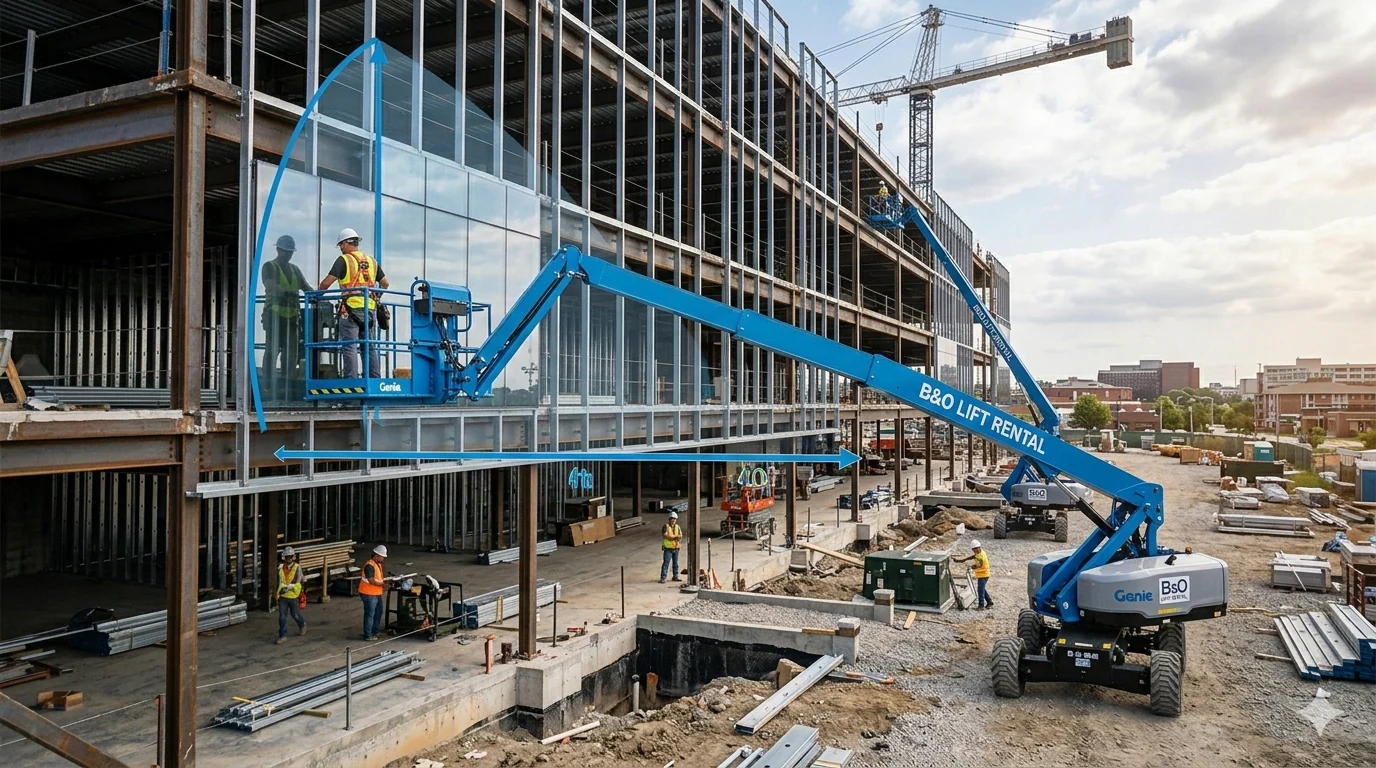
Vertical reach refers to how high a boom lift can position a worker above ground level. On average, most boom lifts used in construction offer working heights ranging roughly from 30 feet to over 130 feet, depending on lift type and configuration.
However, vertical reach figures can be misleading if operators don't understand how they're measured. Here is some useful information that can help curb that margin of error:
H3.1.1: Measuring Maximum Working Height vs Platform Height
H3.1.2: How Elevation Angle Affects Vertical Reach Accuracy
How Horizontal Reach Changes Access Strategy
Now, it is actually horizontal reach that truly differentiates boom lifts from other types of aerial equipment. Many tasks, such as façade work, steel erection, or obstacle clearance, require workers to reach over, around, or across obstructions.
Typical horizontal outreach ranges vary widely, with many boom lifts offering from 20 to 75 feet of horizontal reach, depending on model and boom geometry.
H3.2.1: Offset Distance and Its Impact on Boom Lift Positioning
Reach Tradeoffs: Height vs Distance
Boom lifts operate within a defined performance envelope. When it comes to height and distance, they operate in inverse proportion. Pushing for maximum height often reduces available horizontal reach, and vice versa.
Understanding this tradeoff helps contractors choose the right lift type for the job, considering multiple factors rather than relying on height or distance specs alone.
H3.3.1: Why Maximum Height Does Not Equal Maximum Reach
Common Reach Miscalculations Contractors Make
We all make mistakes. "To err is human", goes the saying. That said, you'll want to avoid making some. Reach-related errors are common on busy sites, especially when timelines are tight, and access challenges change on a daily basis. Such miscalculations can eventually lead to inefficient repositioning or unsafe operating conditions. Let's review some common fumbles when it comes to this, so it won't happen to you. We learn from our mistakes, but sometimes it's better to learn from other people's mistakes:
H3.4.1: Ignoring Platform Load When Calculating Horizontal Reach
H3.4.2: Misjudging Ground Clearance and Swing Radius
Choose the Right Boom Lift for Your Jobsite at B&O Lift Rental
Choosing the right boom lift means balancing different variables such as vertical height, horizontal reach, platform capacity, and site conditions. Luckily, at B&O Lift Rental, we help contractors evaluate real-world access needs, instead of just spec sheets, so equipment performs as expected on jobsites under construction.
Whether your crew needs extended outreach, obstacle clearance, or reliable access at height, our team can help you choose a boom lift that supports safe, efficient work for every construction worker on site. Reach out now! We very much look forward to working with you.