That number on the platform placard isn't just a suggestion, it's the ceiling. Yet plenty of crews still eyeball scissor lift capacity instead of actually calculating it, and that's exactly how a routine renovation job turns into an overload situation. Let's get into how to figure out what your platform can really carry, and where the math usually goes wrong.
Understanding Rated Platform Capacity
Rated capacity sounds like a simple number, but it's really a ceiling built from several moving parts, and every one of them needs to be accounted for before you load the platform.
Personnel Weight vs Equipment Weight
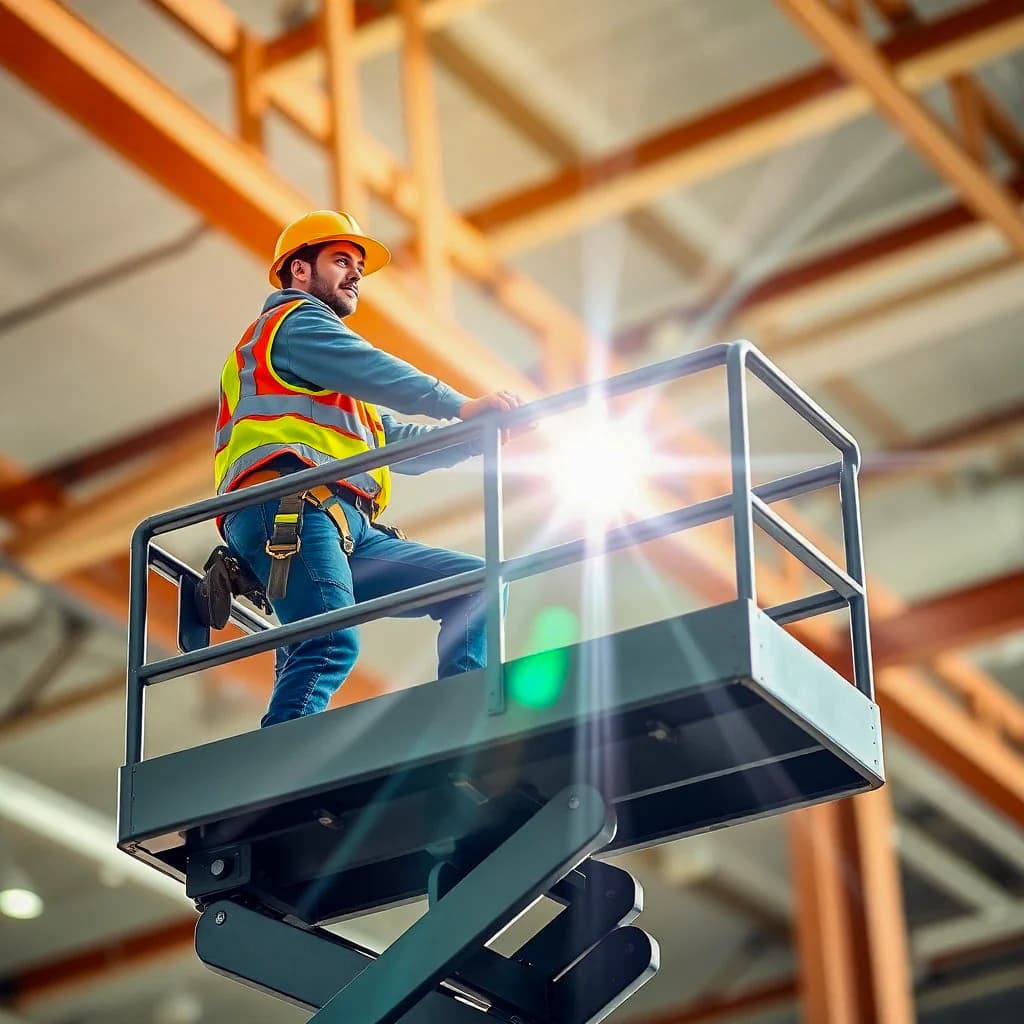
Manufacturers calculate rated capacity assuming an average occupant weight, then build in room for tools and materials on top of that. The problem? Real crews rarely match "average." Two operators in full gear carrying tools already eat into that margin before a single material load goes up with them.
Dynamic Loads During Work
Static weight is only half the equation. Movement tools being used, materials being shifted, even a worker leaning to reach a far corner. Thus creates dynamic loads that briefly exceed the platform's resting weight. As we've said before, safety is the name of the game, and dynamic loads are exactly why rated capacity should never be treated as a number you can push right up against.
Calculating Total Platform Weight
Now that we got that sorted, here's how to actually run the numbers before you send the lift up.
Tools, Materials, and Occupants
Total platform weight is everyone and everything going up together: occupants, their PPE, hand tools, power tools, and any materials being transported. Add it all up before the lift goes up, not after, recalculating mid-task because the platform feels heavy isn't a real safety check.
Manufacturer Capacity Placards
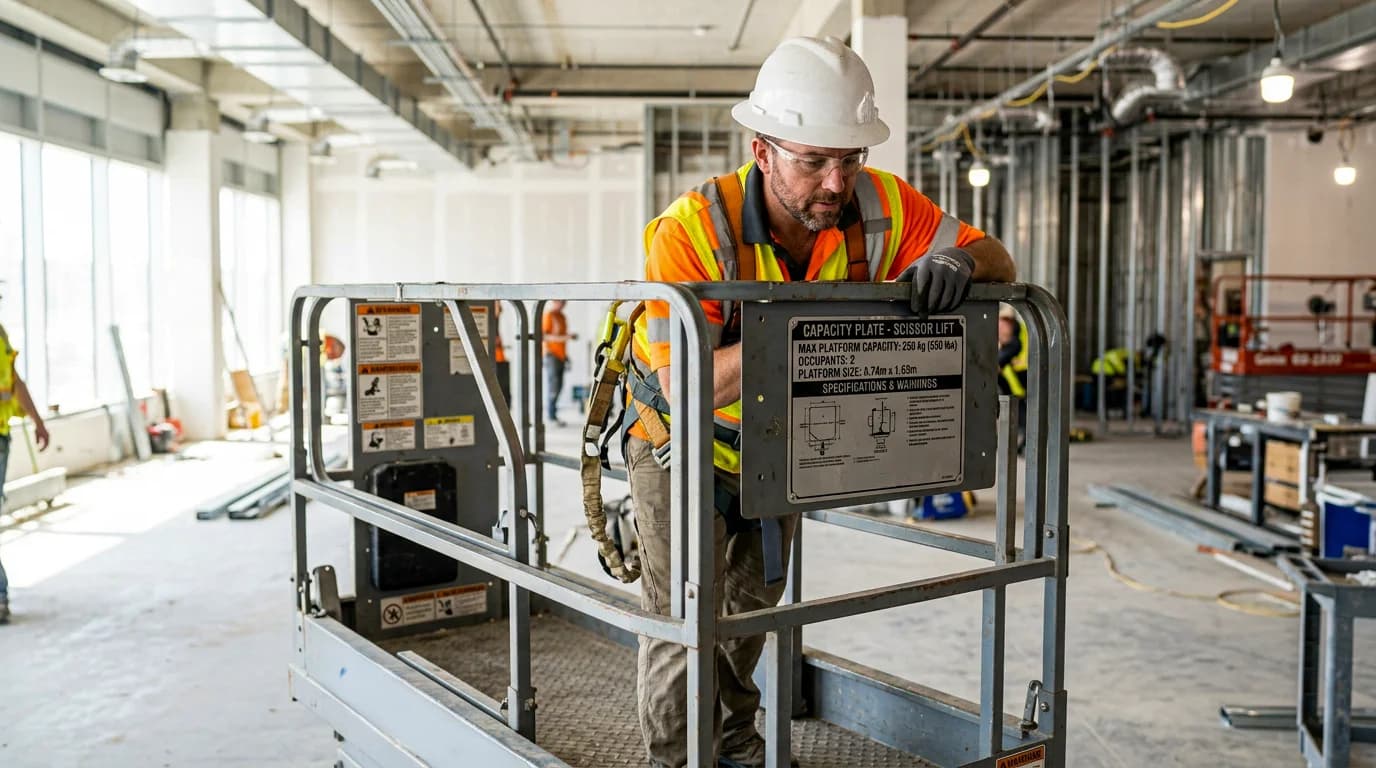
Every scissor lift has a capacity placard mounted on the platform, and it's specific to that model and not a general industry number. Always verify capacity against the placard on the actual unit you're operating, since capacity can vary meaningfully between models that otherwise look nearly identical. The same model-by-model check applies to telehandler load charts, where a swapped attachment changes the numbers entirely.
Capacity Planning for Local Renovation Projects
Renovation work brings its own capacity challenges, especially when a jobsite is occupied, phased, or working around existing infrastructure.
Office Renovations in Washington DC
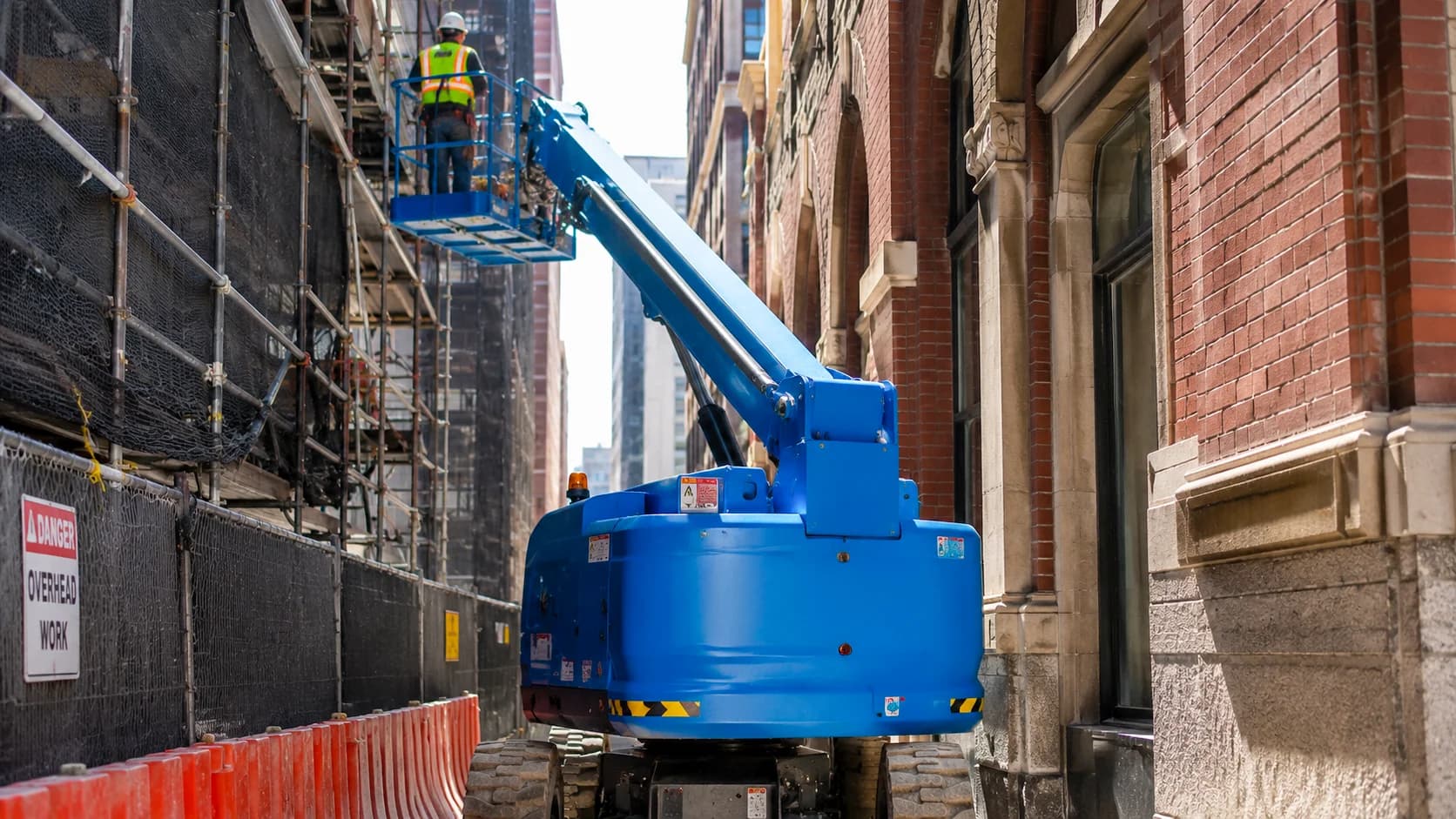
Interior office renovations across DC often mean transporting materials such as drywall, and ceiling tile. That efficiency push is exactly when crews are most likely to underestimate total platform weight, so plan material loads in advance rather than stacking on the fly. For exterior work on those same DC buildings, boom lift swing radius is the constraint to plan around instead.
Warehouse Projects Across Maryland
Warehouse renovation projects across Maryland frequently involve platform extension to reach racking or overhead systems, and extension changes the capacity equation. #ProTip: Always check your manufacturer's capacity chart for reduced ratings at extended platform height, as full capacity at ground level doesn't always carry over once you're extended. When the load rides on forks instead of a platform, choosing the right telehandler attachment becomes the equivalent planning step.
Common Capacity Miscalculations
A handful of recurring errors account for most scissor lift capacity issues on real jobsites:
- Uneven Weight Distribution: Loading materials or personnel unevenly across the platform can shift balance even when total weight stays within rated capacity, creating instability that a simple weight check wouldn't catch. Balance works differently on a boom, where tail swing on urban construction projects is the stability factor to watch.
- Ignoring Platform Extension Limits: Extending the platform without accounting for reduced capacity at that height is one of the most common and most avoidable mistakes on renovation sites.
Failing to plan is planning to fail, and capacity planning is one of the simplest steps to get right before work ever starts.
Rent the Right Scissor Lift at B&O Lift Rental
Real working capacity comes down to doing the math before the platform goes up, not estimating once you're already at height. At B&O Lift Rental, we help contractors and construction workers across DC, Maryland, and Northern Virginia find the right scissor lift for the job, capacity requirements included. Get in touch and let's get to work!