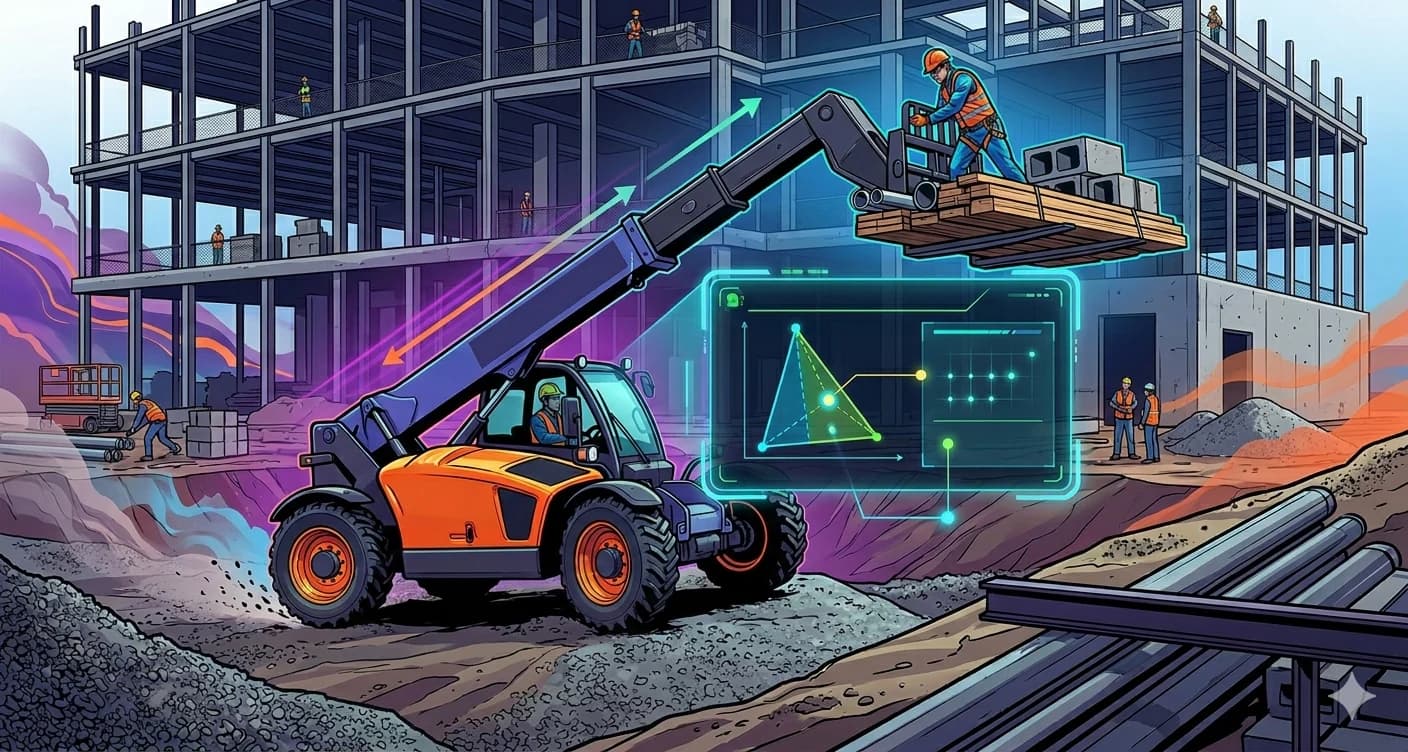
A telehandler is only as good as whatever's bolted onto the end of its boom. Swap in the wrong telehandler attachment, or run one that isn't rated for the load in front of you, and a genuinely versatile machine turns into a liability fast. Let's dive into how to actually match your attachment to the job and where contractors most often get it wrong.
Understanding Attachment Compatibility
Not every attachment fits every telehandler, and not every attachment fits every job. Before anything goes on the boom, you need to know what your carriage supports and what the hydraulics on your machine can actually deliver.
Fork Carriages vs Specialty Attachments
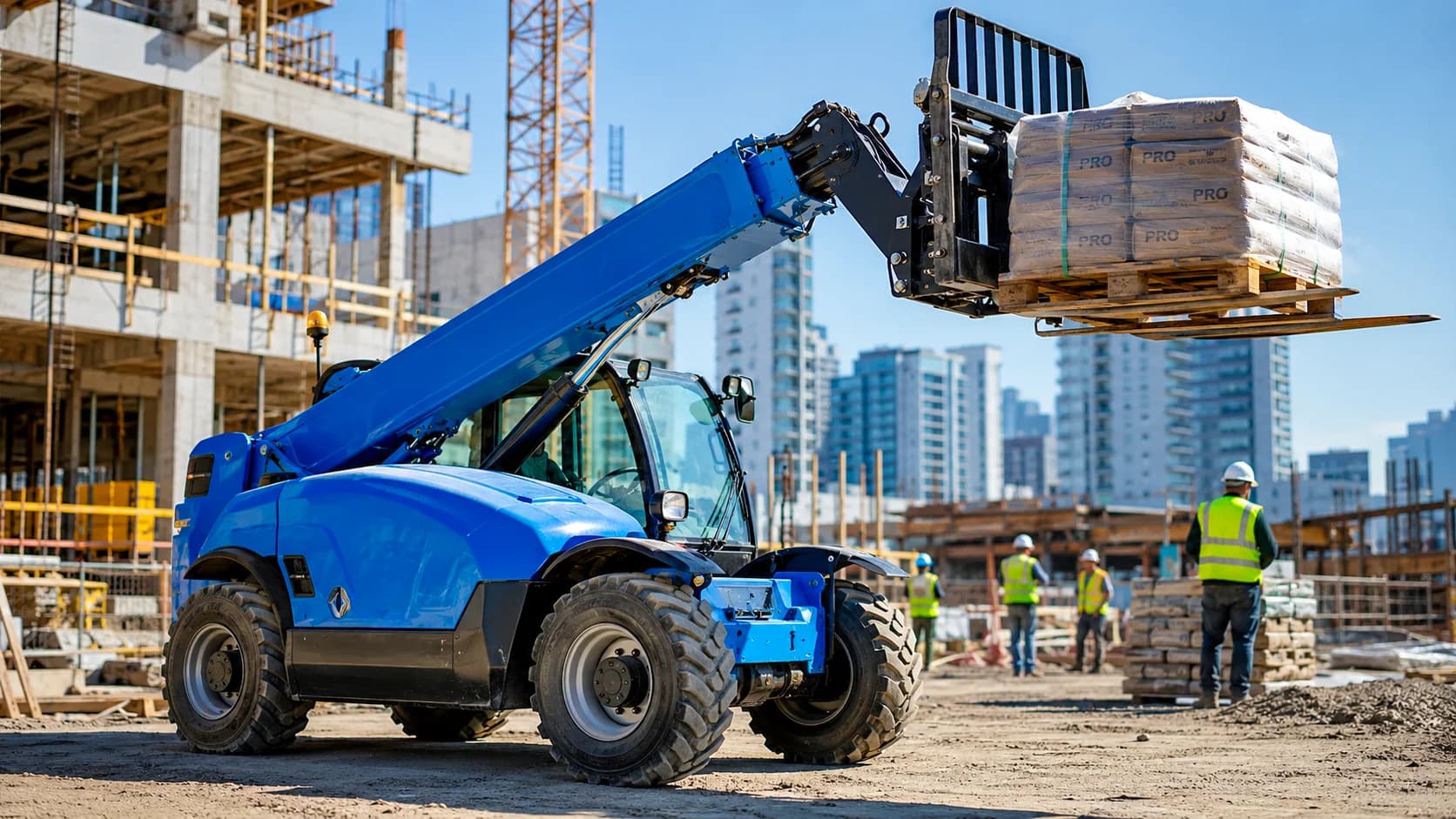
Standard fork carriages handle the bulk of day-to-day material handling; pallets, bundled lumber, block. Specialty attachments (buckets, jibs, sweepers, truss booms) exist because a fork carriage simply can't do everything. The mistake we see constantly: crews grab whatever attachment is sitting closest to the machine instead of the one actually rated for the task. Match the attachment to the job, not the job to whatever's convenient.
Hydraulic Requirements and Rated Capacity
Some attachments like grapples, rotators, hydraulic buckets need auxiliary hydraulic flow to function correctly. Running one on a machine without the right flow and pressure doesn't just limit performance, it can compromise control entirely. Always confirm your telehandler's hydraulic specs match the attachment's requirements before it ever touches the jobsite.
How Attachments Change Load Distribution
Here's what a lot of operators miss: the attachment itself is part of the load. It has its own weight so it changes how the whole machine balances.
Center of Gravity Calculations
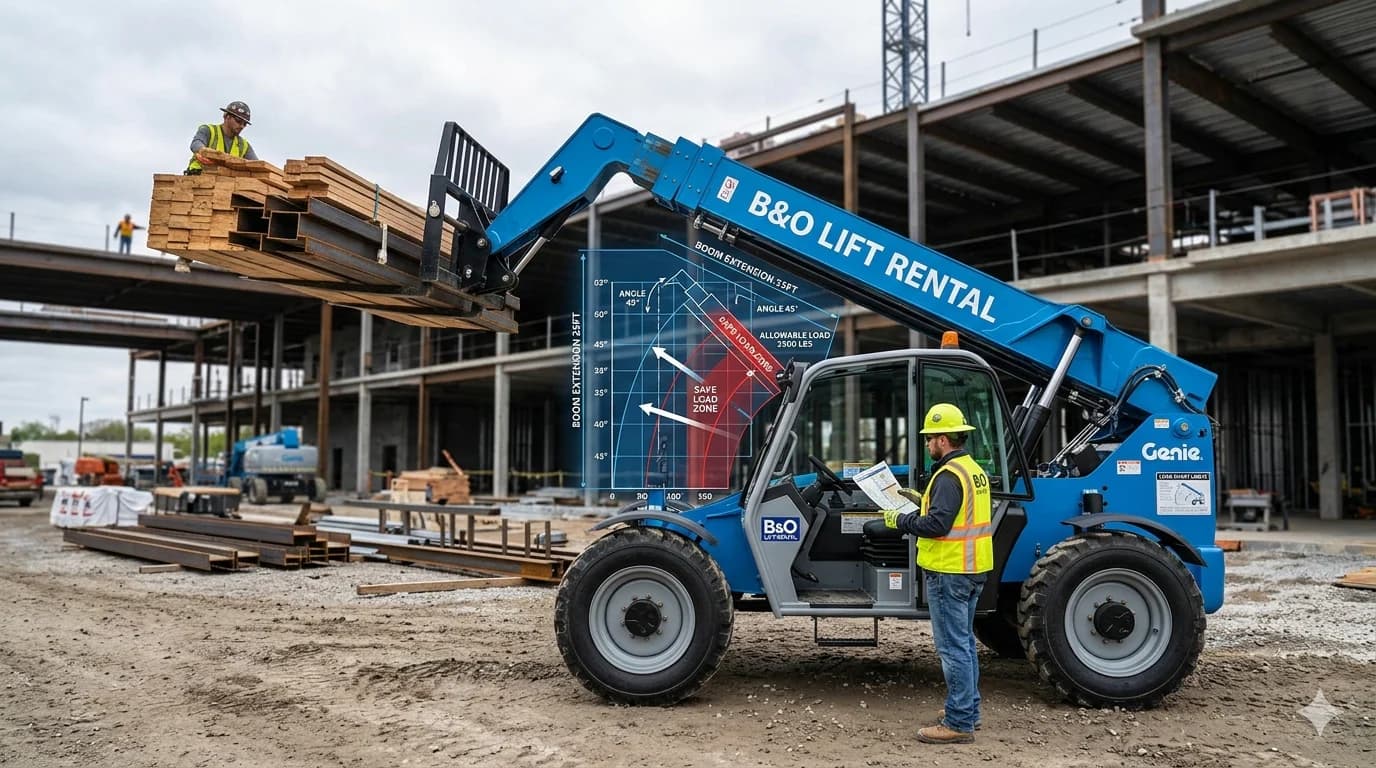
Every attachment shifts the telehandler's center of gravity forward, some more drastically than others. A longer or heavier attachment moves the effective load center further from the front axle, which reduces how much you can safely lift and how far you can extend before stability becomes a real concern.
Attachment Weight vs Payload Capacity
The rated capacity printed on your telehandler's load chart typically assumes a standard fork carriage, not a 400-pound grapple. #ProTip: Always subtract the attachment's own weight from your available payload capacity before you calculate what you can actually lift. Skipping this step is one of the fastest ways to exceed rated capacity without ever realizing it. The same math discipline applies to aerial work platforms, which is why calculating real working capacity on a scissor lift starts with the placard and not a guess.
Choosing Attachments for Jobs Across the DMV
Local conditions matter as much as the spec sheet. What works on a wide-open build in rural Maryland won't necessarily work on a tight infill lot in the District.
Commercial Construction in Washington DC
Tight urban footprints, strict site access windows, and limited staging space define most commercial builds in DC. Compact attachments with tighter turning geometry help crews work efficiently without constantly repositioning the machine, a real time cost on a site where every extra move eats into your schedule. Those same tight DC footprints are exactly where boom lift swing radius and tail swing decide whether a machine fits the site at all.
Residential Projects in Maryland and Northern Virginia
Residential jobs across Maryland and Northern Virginia often deal with softer, less-compacted ground. Attachments that distribute load more evenly, paired with the right tire setup, help you avoid the kind of ground instability that turns a routine lift into a stability issue.
Common Contractor Mistakes
Most attachment-related incidents trace back to a handful of preventable errors. Here's what to watch for:
- Using Incorrect Load Charts: Every attachment has its own load chart. Referencing the standard fork chart while running a specialty attachment is one of the most common and most dangerous mistakes on a jobsite.
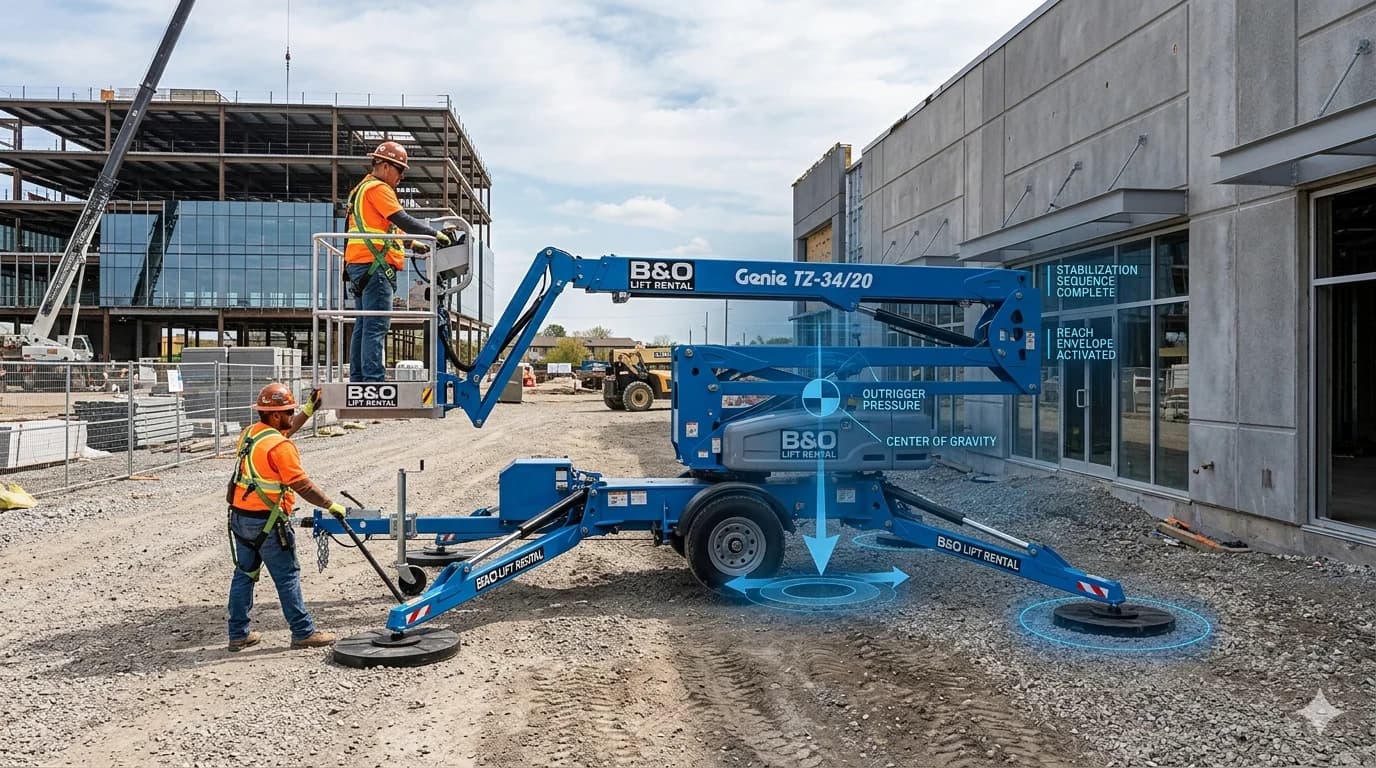
- Ignoring Attachment Geometry: Length, offset, and reach all change how a load behaves once it's lifted. Operators who ignore attachment geometry often misjudge clearance and swing, especially in confined spaces. Machine geometry matters just as much when you are positioning an articulating boom lift in a confined footprint.
Safety is the name of the game, and knowing your attachment as well as you know your machine is non-negotiable. That goes for every machine in the fleet, including knowing your scissor lift platform capacity before anyone steps on.
Buy the Right Telehandler for Your Project at B&O Lift Rental
Picking the right telehandler attachment isn't guesswork it's about matching hydraulics, load charts, and jobsite conditions to the equipment in front of you. At B&O Lift Rental, we help contractors across the DMV find the right telehandler for their project, attachments included, so your crew shows up ready to work instead of troubleshooting equipment. Reach out and let's get to work!