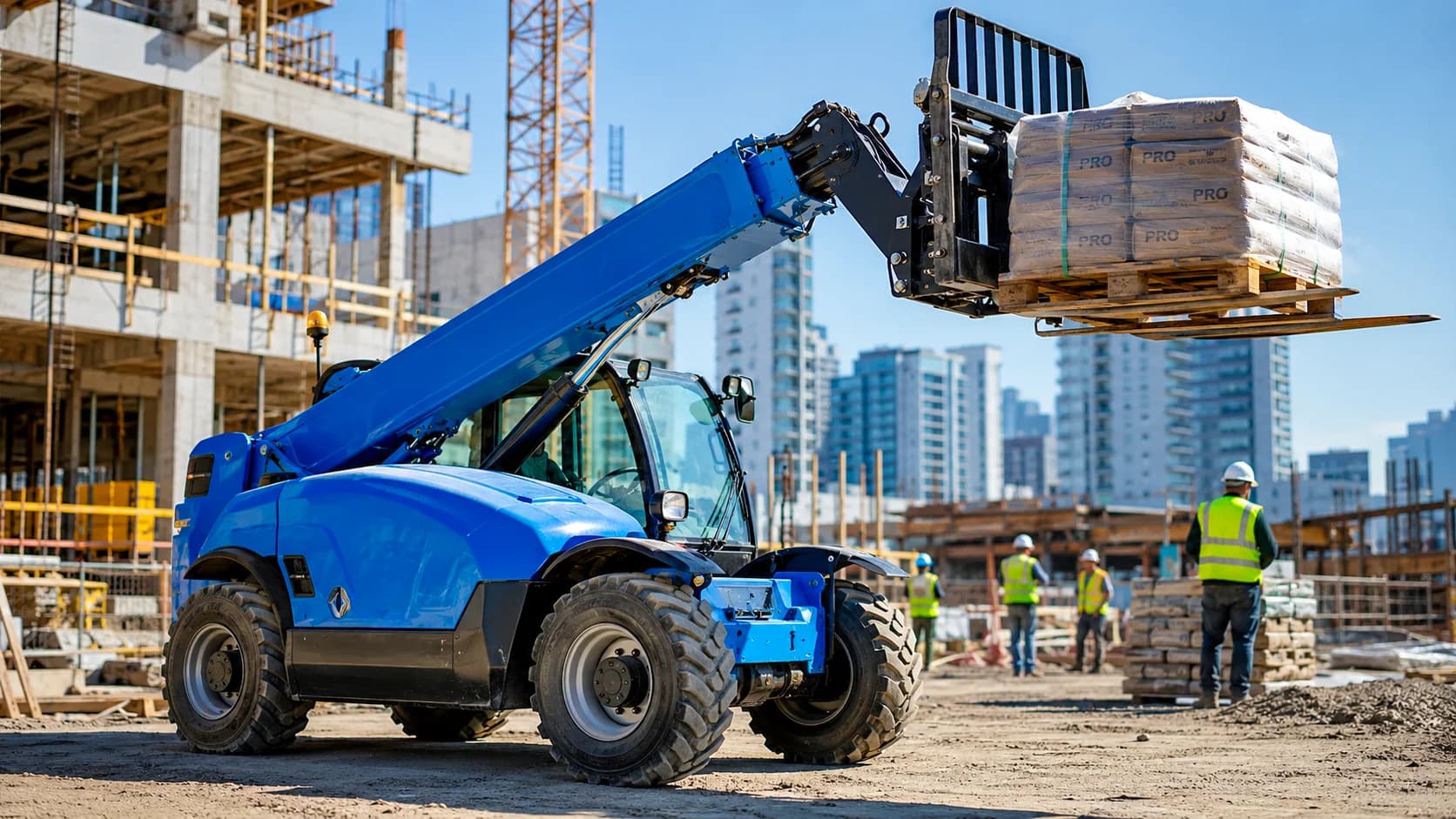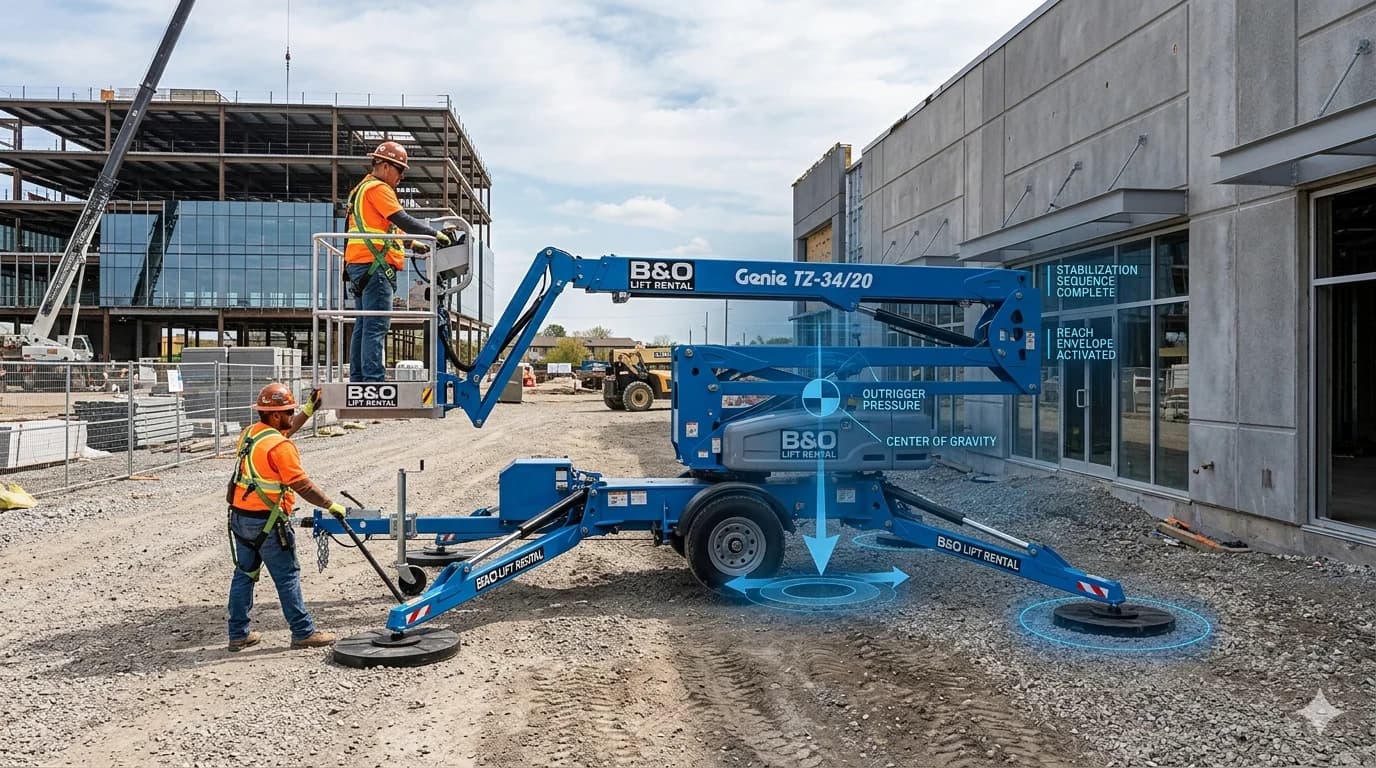
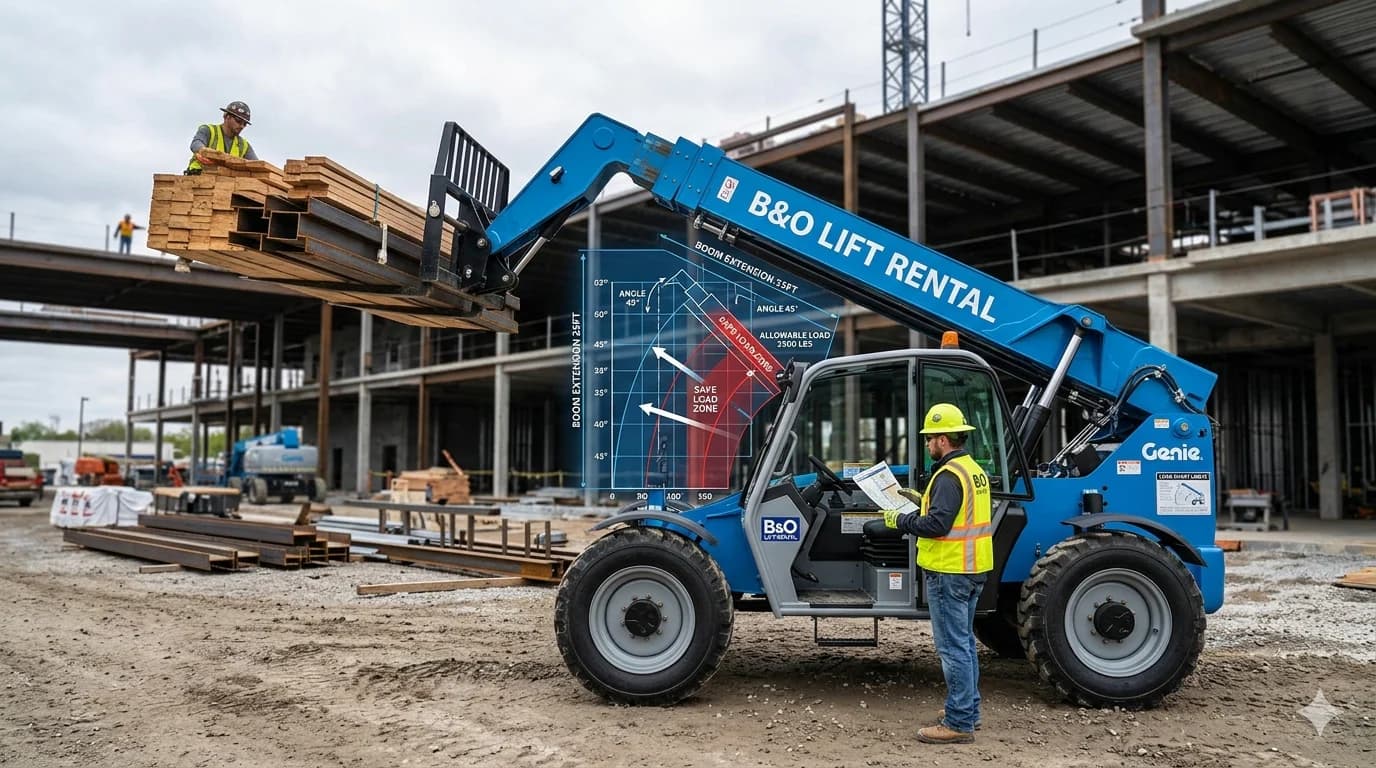
A telehandler is one of the most versatile machines on a construction site. It is also one of the easiest to misuse when load limits are not properly understood. For any construction worker operating or working around a telehandler, knowing how to read a load chart is critical for safe material handling, stable lifting, and efficient jobsite operations.
Unlike fixed vertical lifts, telehandlers operate with variable reach and boom angles. This means capacity changes constantly depending on how the machine is configured.
Join us as we go over the different specs you need to be aware of to safely operate a telehandler on your construction site. Let's get to it!
What a Telehandler Load Chart Represents
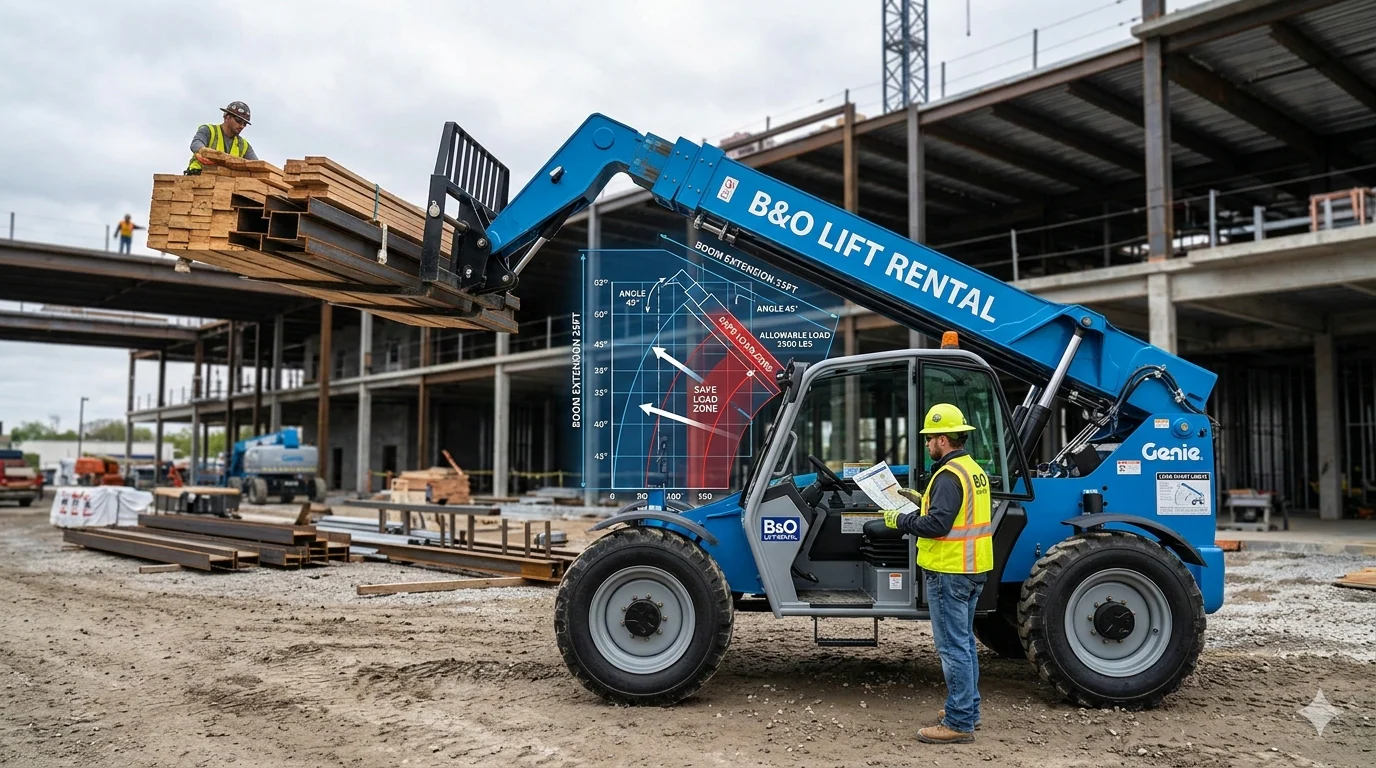
Let's start with the basics. "¿What is a telehandler's load chart?", you might ask. A load chart is a visual guide that shows how much weight the machine can safely lift at specific boom angles, lift heights, and forward reach distances. The keyword here being "safely". It reflects the equipment\'s true stability limits, not just its maximum rated capacity.
Most construction telehandlers have maximum rated capacities that commonly range from 5,000 to 12,000 pounds, but those numbers apply only under very specific conditions. Let's review some crucial factors to consider when figuring out a telehandler's load chart:
H3.1.1: Axle Load, Boom Angle, and Forward Reach Explained
H3.1.2: Why Telehandler Capacity Changes with Boom Extension
Forward Reach vs Lift Height on a Telehandler
Telehandlers are designed to balance vertical lifting and horizontal placement. However, these two capabilities compete with each other. Inverse proportion, remember? If one goes up, the other goes down. And viceversa.
Which is why understanding how reach affects capacity helps operators choose the right approach for placing materials safely. Let's go over a few of the variables you want to be aware of when making these calculations for safe operation of a telehandler:
H3.2.1: How Load Capacity Drops as Reach Increases
H3.2.2: Interpreting Load Zones on the Telehandler Chart
Stability Factors Contractors Must Calculate
When talking about telehandler stability, we must always consider that it is influenced by more than just weight and reach. External factors play a major role in how safely the machine can operate, so contractors must consider the following variables during the planning stage, and not just during the lifting stage:
H3.3.1: Center of Gravity Shifts During Material Placement
H3.3.2: Ground Conditions on a Construction Site and Their Impact
Common Telehandler Load Chart Misinterpretations
Human error should always be considered as a potential danger, which is why many load-related incidents occur not because charts are unavailable, but because they are misunderstood or ignored.
Thus, recognizing these common errors helps crews prevent avoidable accidents. So let's go over some of them to ensure this doesn't happen on your construction site, shall we?
H3.4.1: Confusing Maximum Capacity with Safe Working Load
H3.4.2: Ignoring Attachment Weight When Reading Load Charts
Rent the Right Telehandler for Your Jobsite at B&O Lift Rental
Choosing the right telehandler means taking several variables into account, such as matching lift capacity, reach requirements, and site conditions to the correct machine. As it just so happens, at B&O Lift Rental, we help contractors interpret load charts properly and select equipment that supports safe operation for every construction worker on site.
Whether your project requires precise material placement or extended reach on a complex construction site, our team can help you rent a telehandler that performs safely and reliably under real-world conditions. So, don't wait any longer and get in touch with us! We're very much looking forward to hearing from you.