A towable boom lift can be the smartest machine on a West Virginia job, or the slowest, depending on one thing: how your work points are laid out. On steep grades, narrow access roads, and tight utility corridors, picking between a towable and a self-propelled boom lift comes down to setup cycles, transport, and footprint. Let's break down when the towable wins and when it doesn't.
Work Point Spacing as the Deciding Factor
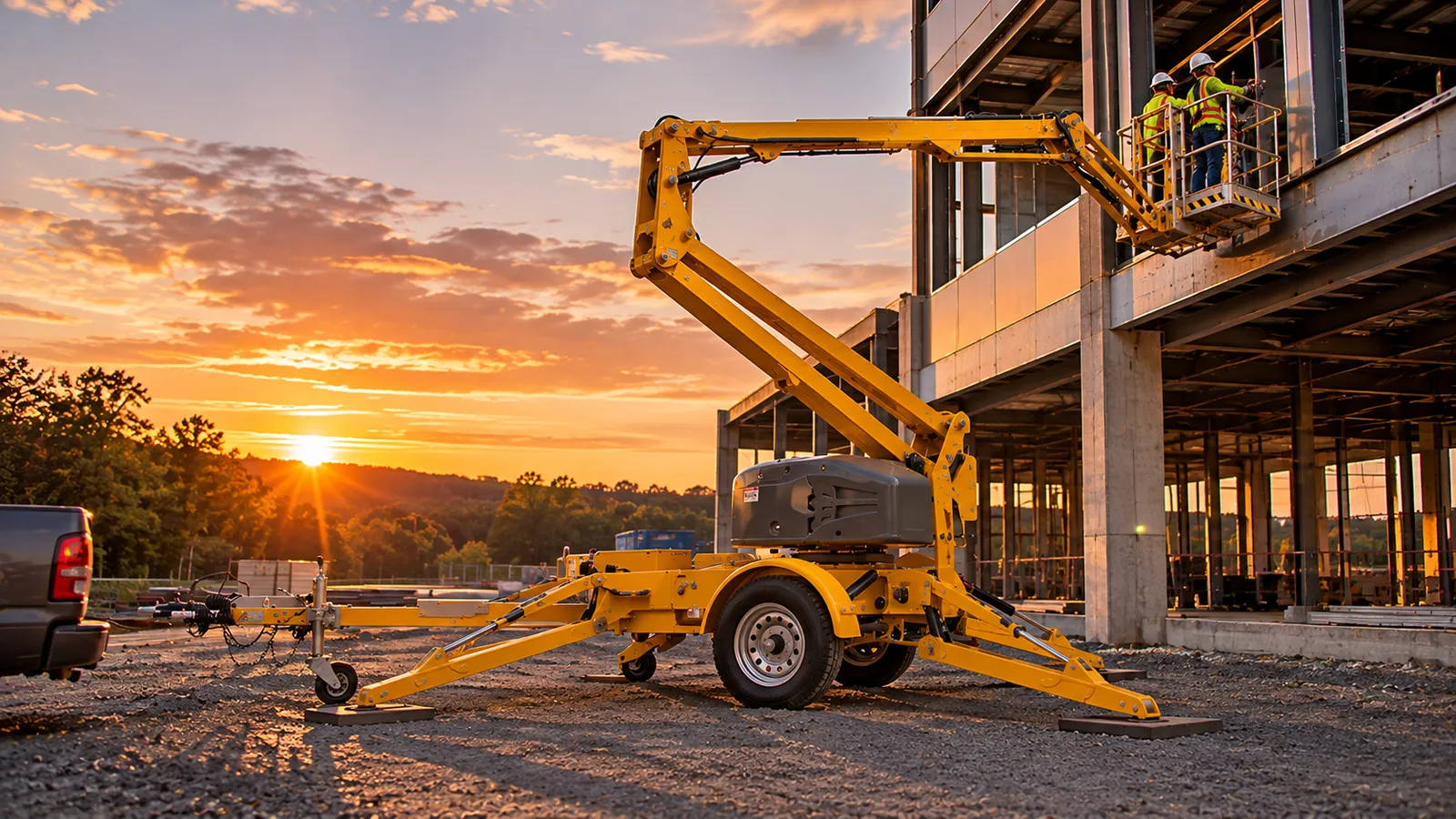
Before you compare specs, map where the work actually happens. Why, you ask? A towable boom lift works from outriggers, so every new work point means a full setup cycle. A self-propelled boom just drives over.
Setup Cycles Per Shift: Stabilize, Work, Stow, Relocate
Every towable relocation follows the same routine: stow the boom, raise the outriggers, move to the next spot, then stabilize and level again. Even with auto-leveling outriggers, each cycle eats real time once you add setting pads and checking the ground.
Count your relocations per shift. Two or three moves a day? No problem. Fifteen moves a day? Your construction worker crew spends more time setting up than working at height.
Clustered vs. Spread-Out Work Points
Towables shine when work points come in clusters, where one setup reaches several tasks within the boom's horizontal outreach: a façade section, a sign, or a pole with multiple attachments.
Spread-out work points flip the math. If you need to move every 20 or 30 feet along a long wall, a self-propelled boom lift that drives between tasks usually pays for itself in saved hours.
Towable vs. Self-Propelled: Technical Tradeoffs
Now that we got the layout sorted, let's put the two machines side by side:
- Transport and Vehicle: A towable rides on its own trailer chassis behind a properly rated pickup. A self-propelled boom needs a truck and a flatbed or lowboy.
- Setup Time: Towables need outriggers deployed and leveled at every spot. Self-propelled booms set up once and drive.
- Repositioning: Towables stow, move, and set up again. Self-propelled booms drive between points, often without lowering all the way.
- Footprint: Towables need room for the full outrigger spread. Self-propelled booms carry their load on tires and counterweight, with tail swing on some models.
- Terrain: Rough-terrain self-propelled booms drive through mud and grades. Towables level on slopes within their outrigger limits, but only move under their own power if they have a drive option.
- Where the Towable Wins: Light weight, easy delivery on narrow roads, lower ground pressure through outrigger pads, and few setups per day.
Transport Weight, Tow Vehicle Requirements, and Site Arrival
Many 35- to 50-foot towables weigh roughly 3,000 to 6,000 pounds, while a comparable self-propelled boom can run 14,000 pounds or more. That difference decides whether a pickup can bring it up a gravel road or you need a lowboy delivery.
Check the towable's gross weight against your tow vehicle's rating, and match the hitch type (ball size or pintle). Confirm trailer brakes and lights before you hit a West Virginia mountain grade.
Outrigger Footprint and Repositioning Between Setups
The outrigger spread is the footprint that matters, not the stowed size. Mid-size towables often need a stabilized area well over 10 feet square, plus clearance for the boom to swing. Measure every work point for that full footprint.
Soft ground changes the story too. Use outrigger pads or cribbing to spread the load, especially on wet clay and fresh fill. For the full ground-prep checklist, see towable boom lift setup requirements.
West Virginia Site Conditions That Shape the Choice
Steep grades, hollows, and narrow roads change what you can deliver to a West Virginia site and where you can set it up.
Grades, Narrow Access Roads, and Limited Staging
Steep, winding county roads can make a lowboy delivery tricky or impossible. A towable behind a pickup gets in where the big truck can't.
Grades on the work area matter just as much. Check the towable's maximum leveling slope on the spec sheet, and if the ground exceeds it, plan grading or pick another spot.
Utility and Infrastructure Work in Tight Corridors
Utility corridors, cell sites, and bridge approaches across the state often come with a narrow right-of-way and fixed work points. That's classic towable territory: drive in, set outriggers, finish the task, and move on.
Safety is the name of the game here. Check for overhead power lines at every setup and keep the required clearance, especially on sites still under construction where line locations change.
Building the Selection Case Before Delivery
We keep saying it, but it's true: if you don't plan ahead, you're setting yourself up to fail. Map everything out on paper before the machine even arrives.
Mapping Work Points Against Required Working Height
List every work point with its required working height and horizontal outreach from where the lift can actually set up. A point 30 feet up but 15 feet back from the nearest level spot needs more boom than the height alone suggests. Platform load matters too, since dual capacity ratings can shrink outreach once the basket gets heavy.
Questions to Confirm With Your Rental Provider
A trusted rental provider should answer these before delivery day:
- Tow Vehicle Required: What gross weight, hitch, and tow rating does this model need?
- Outrigger Space: What is the full outrigger footprint at each setup?
- Real Working Height: What working height and outreach can you reach from where the lift can actually set up?
- Delivery on Grades: Can the provider deliver up your access road, or should you tow it in yourself?
- Estimated Setup Time: How long does one full setup and stow cycle take with this model?
Get the Right Towable Boom Lift in West Virginia From B&O Lift Rental
A towable boom lift wins when work points cluster, access roads get narrow, and delivery weight matters, which describes plenty of jobs in West Virginia. At B&O Lift Rental, we help contractors across West Virginia, Maryland, Washington, DC, Northern Virginia, and Delaware match the boom lift to the work point layout, not just the height. Send us your site sketch through our contact page. Let's get in touch!