Your boom lift doesn't have one capacity. Many of today's machines carry two, and the one you're working under decides how far you can reach. From glazing crews in Baltimore to maintenance teams in the I-95 and Hagerstown distribution hubs, knowing how dual capacity ratings shape the working envelope keeps your crew productive and your machine from shutting down at the worst moment. Let's dive in.
Restricted vs. Unrestricted Platform Capacity
A dual-rated boom lift lists two platform capacities: a lower unrestricted rating that works across the full envelope, and a higher restricted rating that only works within a smaller zone closer to the machine. Here's how the two typically compare (illustrative ranges only; values vary by model, so always check the spec sheet):
- Unrestricted Platform Capacity: Typically around 500 to 660 lb, usable across the full envelope, including maximum horizontal outreach. It usually covers two occupants and works for inspection, light maintenance, and tasks with hand tools.
- Restricted Platform Capacity: Typically around 750 to 1,000 lb, usable only within a reduced envelope with shorter horizontal outreach. It often allows a third occupant and suits material-heavy tasks like glazing, panel installation, or work with heavier tool kits.
How Dual Ratings Create Two Working Envelopes
Think of it as two envelopes nested inside each other. The large, unrestricted envelope gives you full height and full outreach at the lower capacity. The smaller restricted envelope trades reach for capacity, so you can carry more weight, but only closer to the turntable.
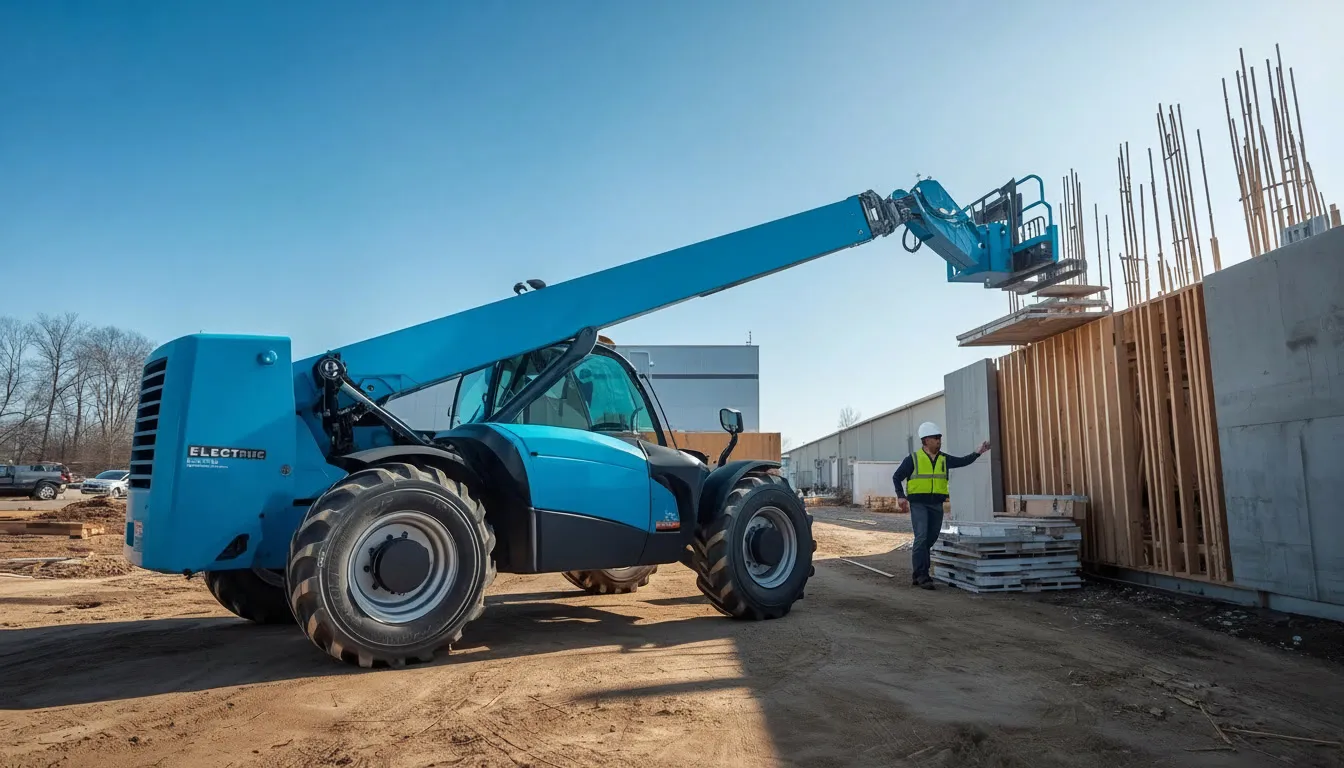
Why, you ask? Tipping moment equals load times distance. Move a heavier platform farther out and the forces on the machine climb fast, so the manufacturer limits outreach whenever the load goes up. It's the same physics behind telehandler load capacity at maximum reach.
What Load-Sensing Systems Do When Capacity Is Exceeded
Under ANSI A92.20, newer boom lifts sold in the U.S. come with platform load-sensing systems. When the load goes past the rated capacity, the system sounds an alarm, lights an indicator, and stops normal movement until you take the excess weight off.
On dual-capacity machines, the system also watches which zone you're in. Load the platform above the unrestricted rating and the machine limits boom movement to the restricted envelope. That's not a malfunction, it's the machine doing its job, but it can stall a crew that planned the task around full outreach.
Calculating Platform Load Against Each Capacity Zone
Failing to plan is planning to fail, and platform load is where plans fall apart. Add it up before anyone climbs in.
Occupants, Tools, and Materials as One Platform Load
The platform doesn't care what the weight is. It counts everything. Run the math like this:
- Occupants: Count each construction worker at body weight plus PPE and harness. Figure 240 to 250 lb per person.
- Tools: Drills, sealant guns, fastener buckets, and cords add up quickly, often 50 to 100 lb.
- Materials: Glass panels, sign faces, conduit, and fixtures. Weigh them, don't guess.
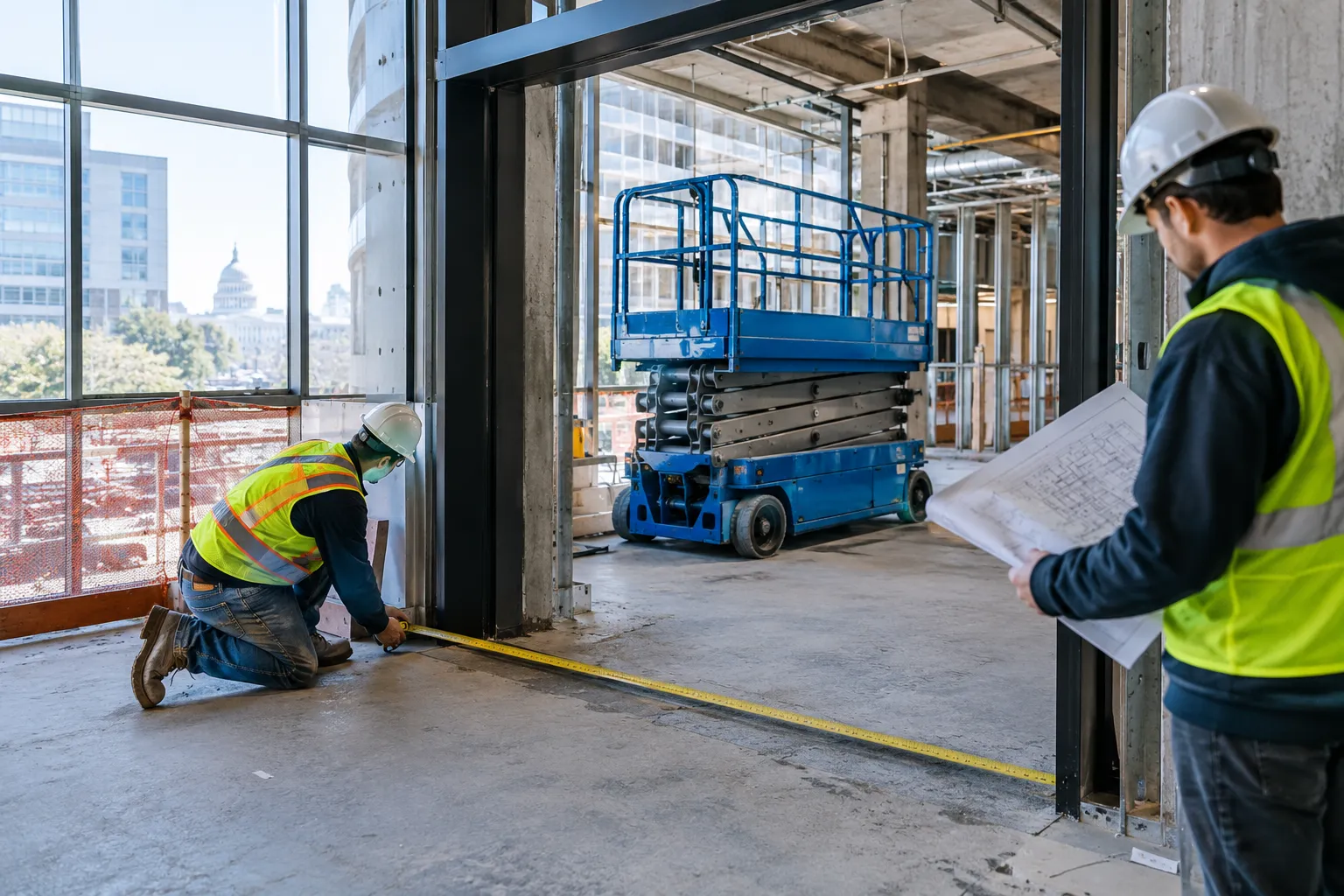
Here's a quick example: two workers at 245 lb (490 lb) plus 70 lb of tools plus a 120 lb glazing unit equals 680 lb. On a machine rated 660 lb unrestricted, you just moved into the restricted envelope, and your outreach shrinks. The same add-it-all-up method applies to real working capacity on a scissor lift.
Jib and Riser Effects on Articulating Boom Lift Capacity
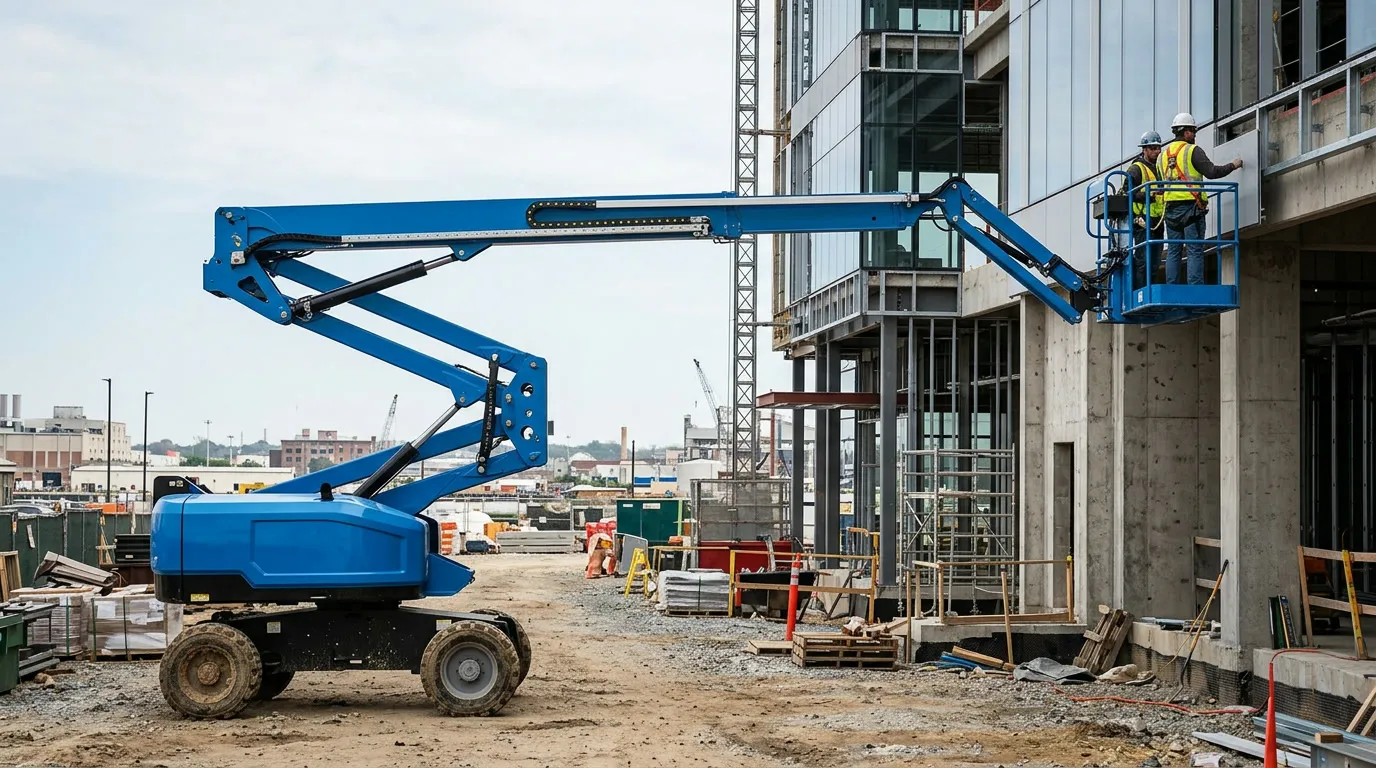
On an articulating boom lift, the jib and the up-and-over riser let you work around obstacles, but they don't add capacity. Every foot of extra horizontal reach they give you still has to fit the zone your load allows. If you're weighing an articulating machine for a tight site, our guide to boom lift platform positioning covers setback and outreach planning.
Platform accessories count too. Glazing carriers, pipe racks, and panel cradles deduct their own weight from rated capacity, and some cut the allowed number of occupants. Check the manual for each accessory you plan to mount.
Maryland Applications Where Capacity Zones Matter
Now that we got the math sorted, let's look at where dual ratings really come into play across Maryland job sites.
Commercial Facade, Signage, and Glazing Work
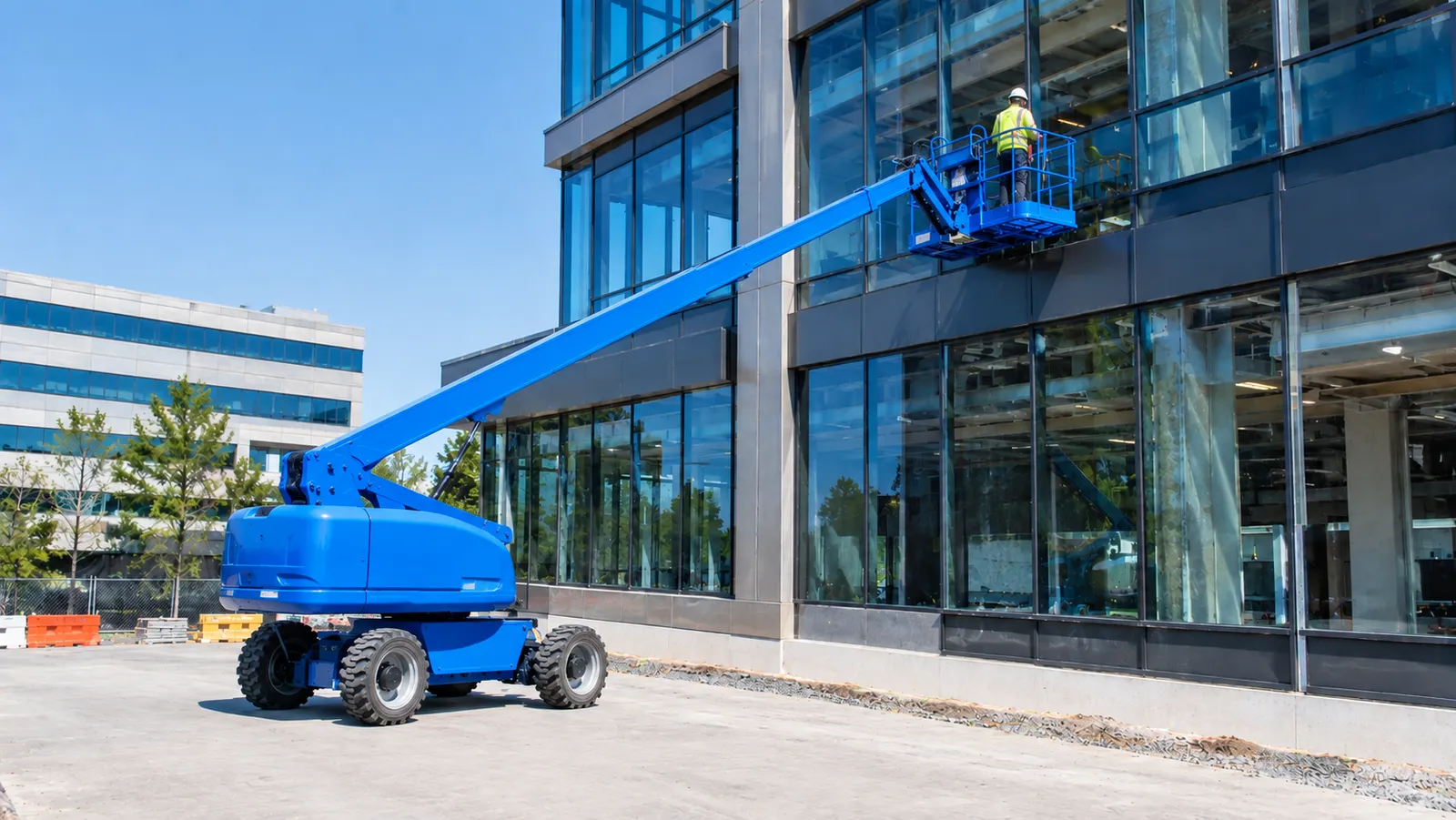
Facade and glazing work in Baltimore, Annapolis, and the Montgomery County corridor often means reaching over planters, sidewalks, and landscaping to reach the wall. That pushes you to long outreach, right where the unrestricted capacity applies.
Add two installers and a glass panel, and you're over it. Plan to stage the machine closer, use lighter loads per trip, or pick a model with a larger unrestricted rating.
Warehouse and Distribution Maintenance at Extended Outreach
Distribution centers along I-95 and around Hagerstown run racking, lighting, and roof-deck work over aisles and stored product. Your machine can't always park right under the work point, so extended outreach becomes the norm.
That makes maintenance crews a classic unrestricted-zone case. Keep platform loads lean, and send heavy parts up on a separate lift rather than carrying them across a long reach.
Selecting the Machine by Load at the Work Point
Pick the boom lift by the load you need at the work point, not just the height on the brochure.
Reading the Capacity Zone Chart Before Renting
Before you sign for a heavy equipment rental, walk through the chart with these steps. A trusted rental provider will happily do it with you:
- Identify Both Capacities: Find the restricted and unrestricted ratings and the occupant limit for each.
- Locate the Work Point in the Envelope: Plot the height and horizontal outreach your task needs on the range chart.
- Compare Against the Actual Load: Use your total platform load, including accessories, to see which zone you'll be in.
- Verify With the Model's Manual: Confirm the numbers in the operator's manual for that exact model and configuration.
Splitting Crews or Material Lifts to Stay in the Larger Envelope
If your load lands just above the unrestricted rating, change the load rather than the machine. Send one worker instead of two at max outreach, or lift materials in smaller batches.
Match Your Boom Lift to the Load With B&O Lift Rental in Maryland
Dual capacity ratings mean your boom lift's reach depends on what's in the basket, so plan the load before you plan the reach. At B&O Lift Rental, we help contractors across Maryland, Washington, DC, Northern Virginia, Delaware, and West Virginia match boom lifts to real platform loads and work points, so your crew never gets stuck mid-task. Send your loads and work point measurements through our contact page. Reach out and let's get to work!