Ever watched a boom lift barely clear a corner by inches on a tight downtown lot? That's swing radius doing exactly what it does, quietly deciding whether your machine fits the site or fights it the whole day. Let's dive into what boom lift swing radius and tail swing actually mean for your project, and how to plan around them before the machine ever shows up.
Understanding Swing Radius
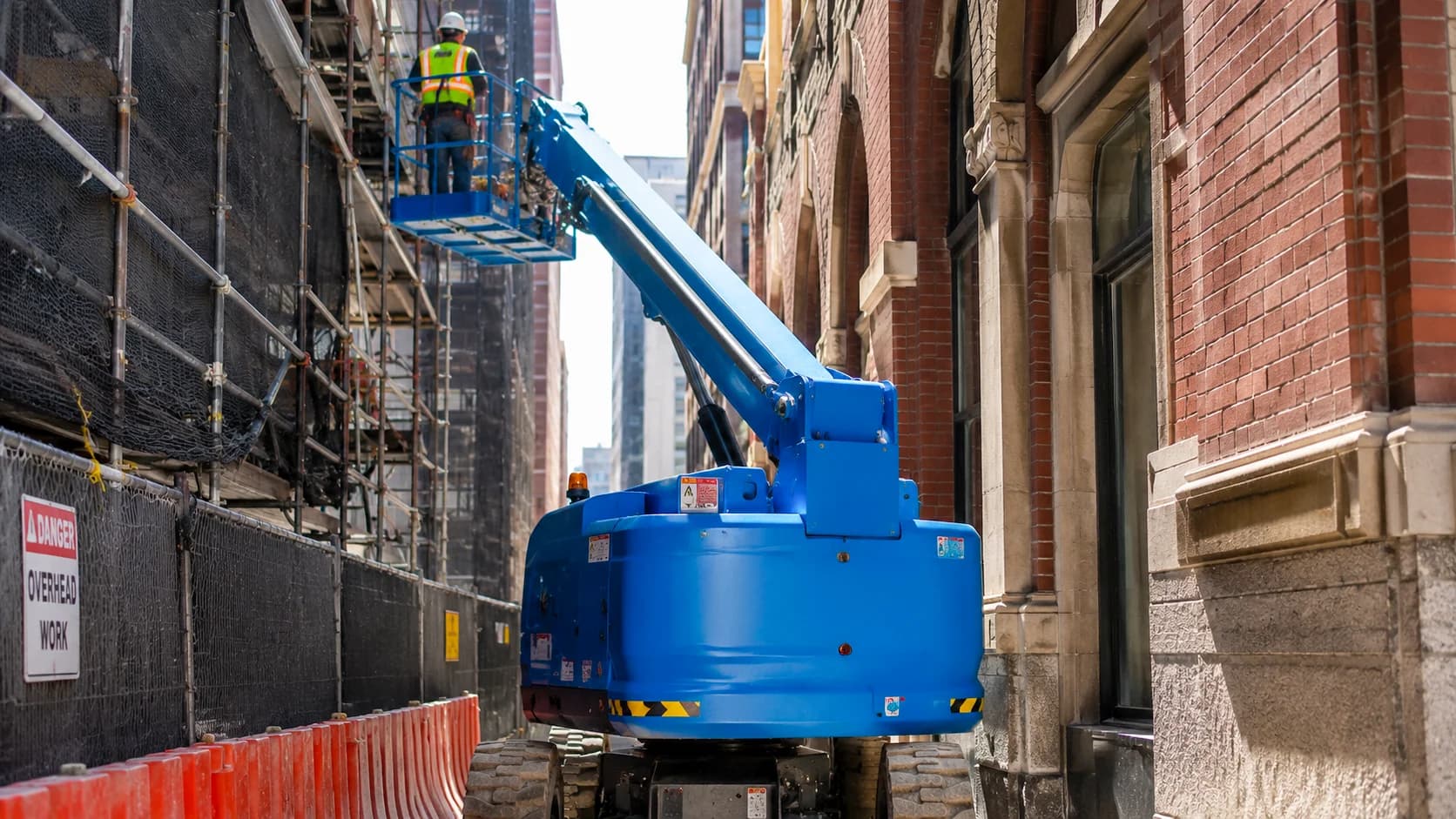
Swing radius refers to how far any part of the machine, the chassis, counterweight, or platform, extends outward as the turret rotates. On an open site, it barely matters. On an urban construction project boxed in by buildings, fences, and parked equipment, it matters a lot.
Tail Swing vs Zero Tail Swing
Tail swing specifically refers to the counterweight and rear chassis extending beyond the tracks or wheelbase during rotation. A machine with standard tail swing needs clearance behind it at all times, even when the boom is pointed forward. Zero tail swing machines keep the rear end within the footprint of the undercarriage, which is often the only option on genuinely confined sites.
Chassis Rotation Explained
As the turret rotates, the entire upper structure of the machine, not just the boom moves with it. Operators new to a jobsite sometimes forget this and focus only on where the platform is headed, not where the counterweight is swinging behind them. That's how equipment clips scaffolding, parked vehicles, or building corners.
Planning Around Existing Structures
You ready? Because this is where most positioning mistakes actually happen, not during the lift, but before it, when nobody measured the site properly. Interior work on those same sites usually calls for a scissor lift instead, where the planning starts with total platform weight rather than swing radius.
Historic Buildings in Washington DC
Historic districts across DC come with tight setbacks, narrow alleys, and structures you genuinely cannot afford to clip. Zero or reduced tail swing machines are frequently the only viable option here, and site plans should account for swing radius before the boom lift is even scheduled to arrive.
Confined Commercial Sites in Northern Virginia
Commercial infill projects in Northern Virginia often share property lines with active neighboring businesses, leaving minimal margin for error. Mapping out swing radius against the full site perimeter, not just the work zone, prevents surprises once the machine starts moving.
Machine Positioning Strategies
As we've talked about before, failing to plan is planning to fail. Positioning strategy is where that principle really earns its keep.
Working Around Utilities
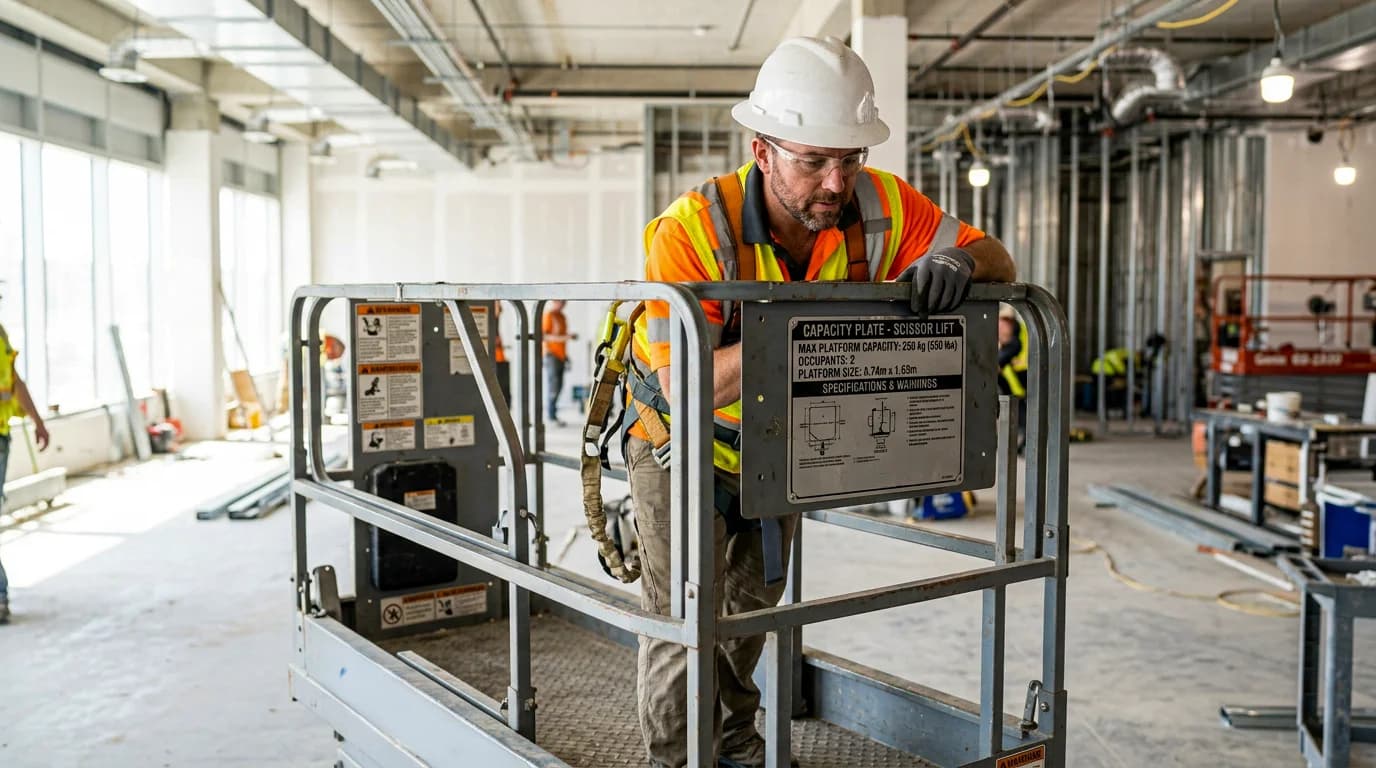
Overhead lines, guy wires, and rooftop mechanical units all interact with swing radius in ways that aren't always obvious from ground level. Before positioning any articulating boom lift, walk the site and map utility clearances against the machine's full rotation, not just its resting footprint. On interior work the equivalent pre-check is rated platform capacity on a scissor lift, run before anything goes up.
Reducing Equipment Repositioning
Every time a boom lift has to be repositioned, you lose time, and on a job under construction with a tight schedule, that adds up fast. #ProTip: Position the machine with its full swing radius in mind from the start, it's almost always faster to plan once than to reposition three times. The same logic applies to picking a telehandler attachment before the machine arrives instead of swapping it out mid-shift.
Choosing Between Straight and Articulating Machines
Not every job calls for the same silhouette. Straight boom lifts offer greater height and horizontal reach in open areas, while an articulating boom lift bends at multiple points to work around obstacles a straight boom simply can't navigate.
When an Articulating Boom Lift Performs Better
Anywhere you need to reach up and over an obstruction, a loading dock, a low overhang or an HVAC unit, an articulating boom lift typically outperforms a straight boom. The added joints let the platform approach the work area from angles a straight telescoping boom can't match.
Clearance Planning Before Arrival
Before the machine ever rolls onto site, confirm gate widths, overhead clearance, and turning space against the unit's specs. A boom lift that can't physically get to its work zone is a scheduling problem you can avoid entirely with a quick walkthrough beforehand. Run the same check on your attachments, since attachment load charts and hydraulic requirements change what a machine can actually do once it is on site.
Choose the Right Boom Lift at B&O Lift Rental
Swing radius and tail swing aren't details to figure out on the fly as they're the difference between a machine that fits your site and one that fights it all day. At B&O Lift Rental, we help contractors across DC, Maryland, and Northern Virginia match the right boom lift to the site conditions in front of them. Your move. Contact us!