Getting a boom lift to the work site sounds simple until you're staring at a tight commercial lot, wondering how you're going to reach that corner without repositioning three times. Platform positioning is where good planning either saves your schedule or costs you the whole afternoon. Let's dive into how to think through boom lift positioning on Virginia commercial sites before the machine ever shows up.
Understanding Boom Lift Positioning
Positioning a boom lift isn't just about parking it somewhere close to the work. It's about understanding the relationship between where the machine sits and where the platform actually needs to end up.
Setback Distance vs. Working Outreach
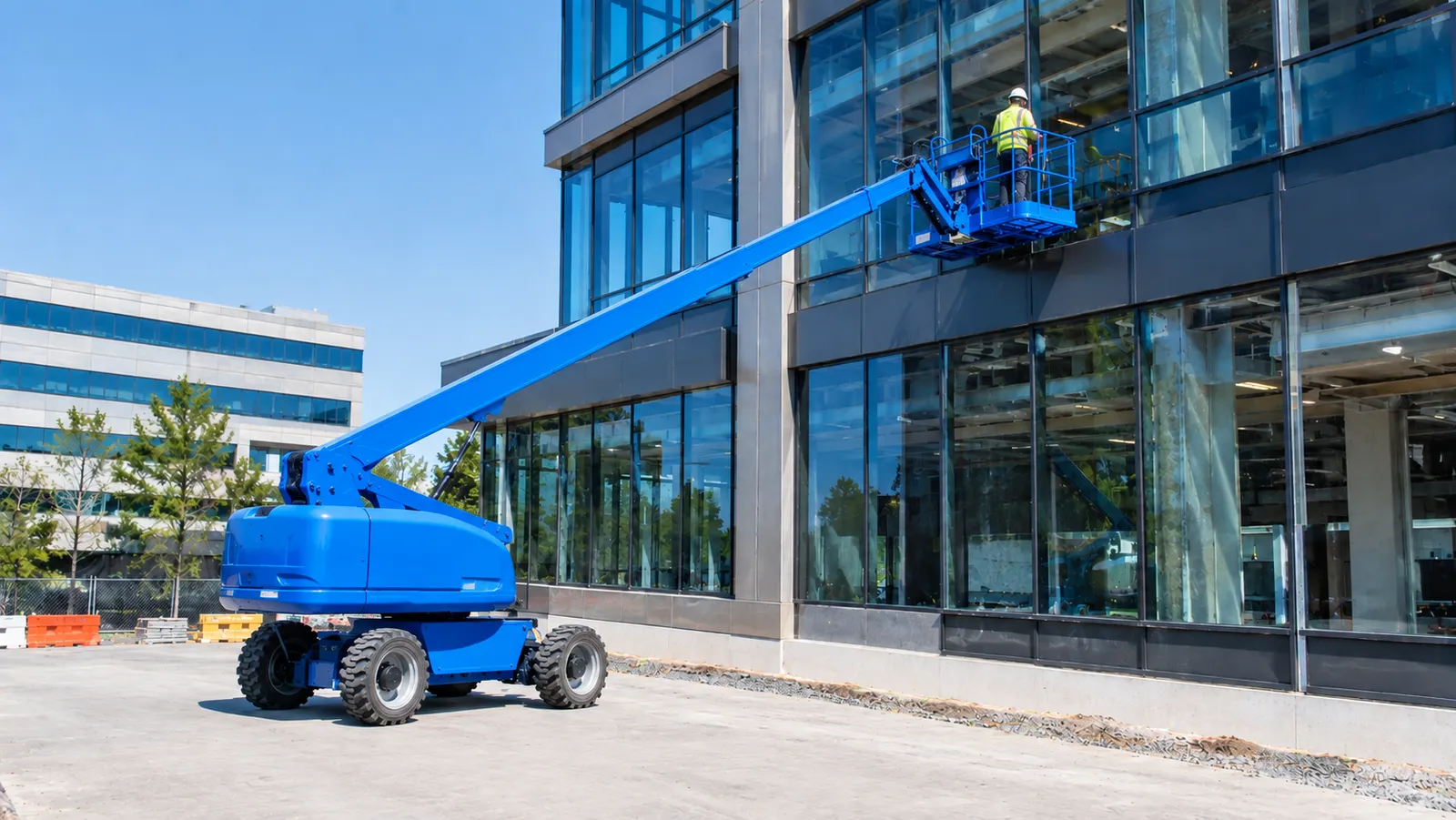
Setback distance is how far back the base of the machine sits from the work point. Working outreach is the maximum horizontal distance the boom can extend to close that gap. As we've talked about before, horizontal and vertical reach work together, and confusing them is one of the fastest ways to end up short of your target once the boom's fully extended.
Mapping the Working Envelope
Every boom lift has a working envelope, the full range of positions the platform can reach from a single setup point. Understanding that envelope before you position the machine means fewer repositions and a lot less guesswork once the operator's already up at height.
Positioning Around Existing Structures
You ready? Because this is where most positioning headaches actually start, not once the boom lift is on site, but before it, when the site plan doesn't account for what's already standing.
Working Around Building Setbacks
Existing structures on Virginia commercial sites often dictate where a boom lift can even set up in the first place. Building setbacks, property lines, and adjacent construction all reduce the usable footprint, so positioning has to work backward from those limits rather than assuming open ground.
Accounting for Obstructions
Awnings, scaffolding, HVAC units, and overhead lines all interact with the boom's swing path in ways that aren't obvious from ground level. Before committing to a position, walk the full working envelope against every obstruction within range, not just those directly in front of the machine. Our breakdown of boom lift swing radius and tail swing covers the rear clearance side of that same check.
Boom Lift Positioning on Virginia Construction Sites
Virginia's mix of dense commercial corridors and active job sites means positioning strategy shifts depending on what you're working around.
Tight Commercial Sites
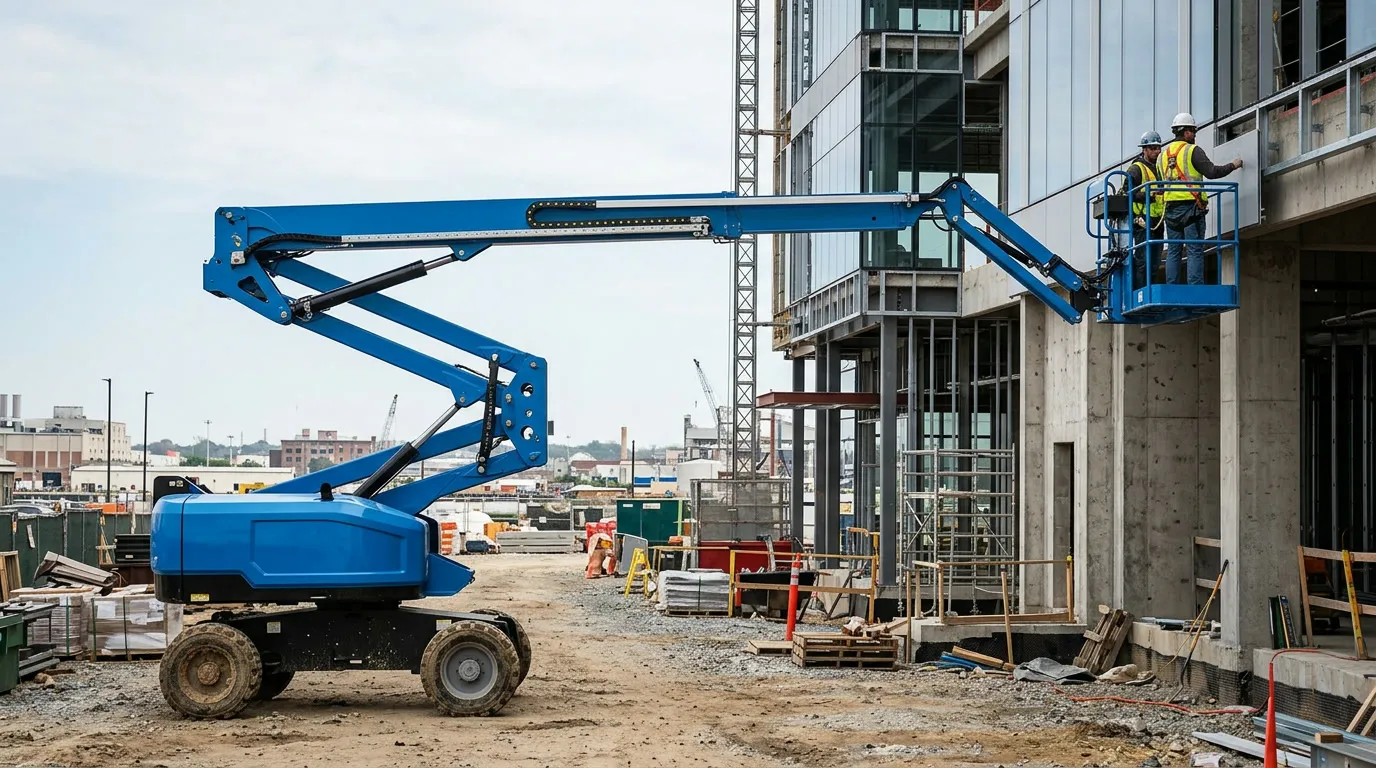
Commercial infill projects across Northern Virginia often leave minimal room to maneuver, with property lines and neighboring businesses closing in on both sides. On these sites, an articulating boom lift frequently outperforms a straight boom because it can reach over obstacles rather than requiring a clear line of sight to the work point.
Sites That Are Under Construction
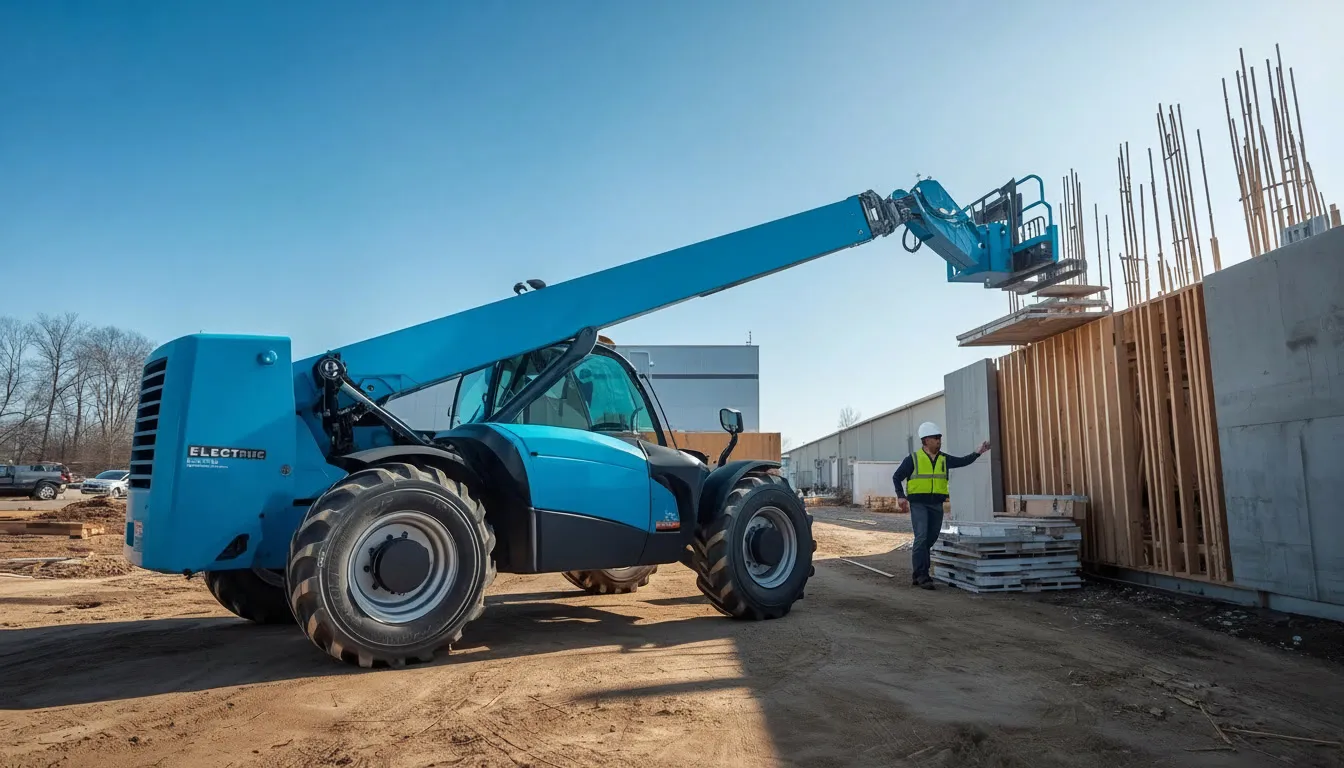
Sites still under construction bring their own positioning challenges: staged materials, active trenching, and shifting access points change week to week. A construction worker planning boom lift positioning on an active site needs to reassess the working envelope regularly, not just at the start of the project. The same shifting ground affects material handling, where telehandler load capacity at maximum reach drops as the machine is pushed farther from its drop point.
Improving Platform Positioning Efficiency
Without a plan, you're set up to fail. Getting your positioning straight is the easiest win on the table.
Plan From the Work Point Backward
Instead of parking the machine and figuring out the reach from there, start at the work point and work backward to determine the setback distance and outreach. #ProTip: Mark the work point first, then test setback options against it, this cuts down on repositioning far more than eyeballing distance from the machine outward.
When an Articulating Boom Lift Helps
Anywhere a straight line to the work point isn't available, a loading dock, a low overhang, a tight courtyard, an articulating boom lift typically closes the gap a straight boom can't. The added joints let the platform approach from angles that open up positioning options a straight telescoping boom simply doesn't have.
Choose the Right Boom Lift for Your Virginia Project
Platform positioning isn't something to sort out once the machine's already on site, it's a decision that starts with the work point and works backward from there. At B&O Lift Rental, we help contractors across Virginia match the right boom lift to their site's setback, outreach, and obstruction challenges. Reach out and let's get to work!