That load chart taped inside the cab isn't just paperwork, it's the difference between a clean lift and a machine that tips before you even see it coming. Want to know more about how capacity actually changes once you extend the boom? Let's get into what happens to telehandler load capacity at maximum reach, and where Delaware contractors most often get the math wrong.
Understanding Telehandler Load Capacity
Rated capacity looks like a single, fixed number, but it's really a moving target that depends entirely on how far and how high you're reaching.
Rated Capacity vs. Capacity at Reach
The capacity printed on a telehandler's spec sheet typically reflects the machine's maximum lift at minimum extension, with the boom retracted and the load close to the base. The moment you extend the boom, that number drops, sometimes dramatically. Confusing the two is one of the most common ways contractors overestimate what they can safely lift.
Why Load Center Matters
Load center refers to the distance between the front face of the forks and the center of the load's weight. A longer load center shifts weight farther from the machine, reducing how much you can safely carry at any given reach. Two loads of identical weight can require completely different capacity allowances depending on how that weight is distributed.
How Maximum Reach Changes the Lift
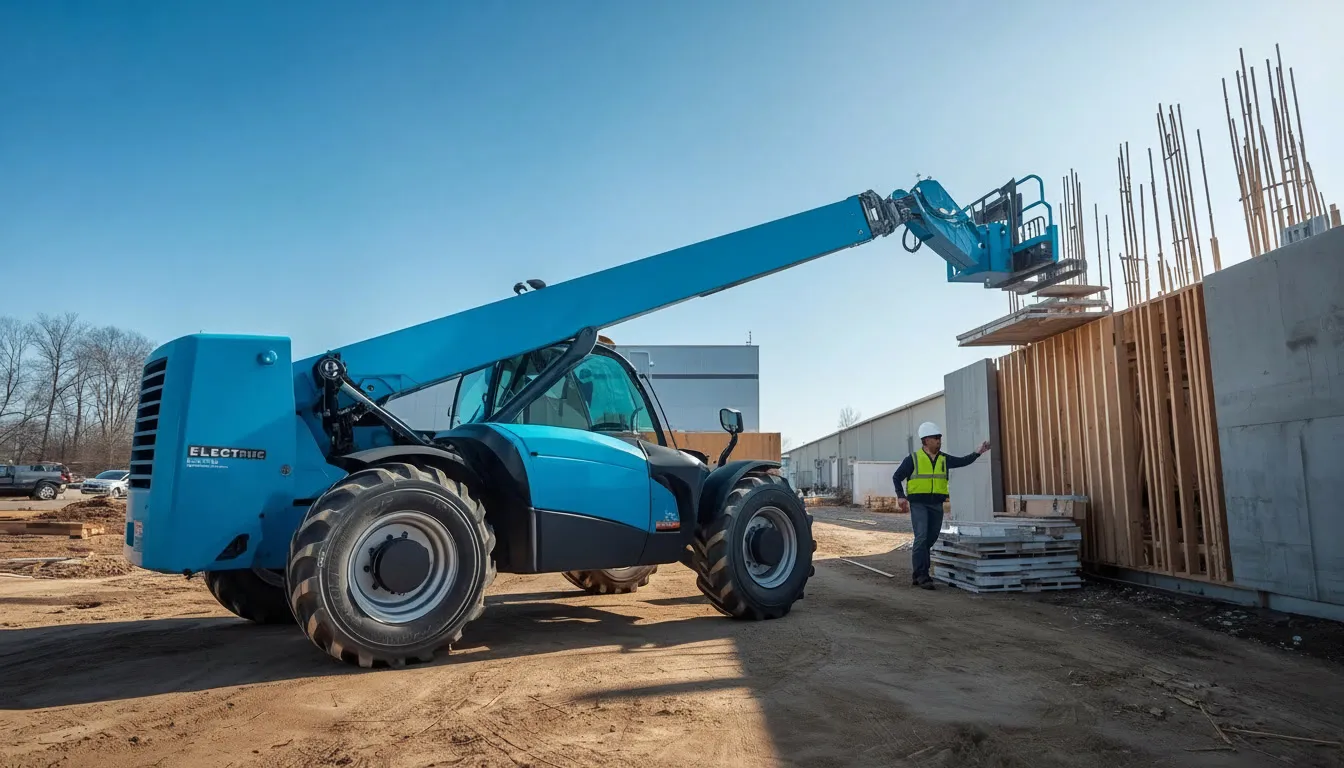
The farther the boom extends, the less forgiving the machine becomes. Small miscalculations that wouldn't matter at low reach turn into real stability concerns at full extension.
Boom Extension and Load Charts
Load charts account for this by reducing allowable capacity as boom angle and extension increase. Why, you ask? Extending the boom moves the load's effective center of gravity farther from the telehandler's base, increasing the tipping force the machine must counteract. Always cross-reference your actual boom position against the chart rather than assuming a flat percentage reduction. If the chart itself feels like a puzzle, our guide to reading telehandler load charts breaks it down zone by zone.
Attachment Weight Counts Toward the Load
Whatever's mounted to the boom, forks, a jib, a specialty attachment, has its own weight, and that weight comes out of your available capacity before the material load ever goes on. #ProTip: Subtract attachment weight from rated capacity first, then calculate what's left for the actual load, not the other way around. For help picking the attachment in the first place, see choosing the right telehandler attachment.
Material Placement on Delaware Jobsites
Delaware's mix of coastal commercial buildings and inland industrial sites means material placement planning varies depending on where the project is located.
Planning Material Drop Points
Now that we've got that sorted, here's where it plays out on the ground: material drop points need to be chosen with maximum reach capacity in mind. A drop point requiring full boom extension at a wide load center might require a smaller load than the crew originally planned for.
Working From Restricted Positioning Areas
Restricted site access, tight lots, staged materials, and active trenching often force a telehandler into a fixed position, requiring greater reach to place materials where they're needed. A construction worker planning placements from a restricted position should recheck the load chart for that specific reach rather than relying on capacity figures from a more open setup. Aerial work on those same tight lots follows the same logic, which is why boom lift platform positioning starts from the work point and works backward.
Common Telehandler Capacity Planning Errors
Most capacity-related incidents on Delaware job sites trace back to a short list of avoidable mistakes.
- Using the Maximum Capacity as the Working Capacity: Treating the machine's highest-rated number as a baseline for every lift ignores the fact that capacity decreases as reach or height increases.
- Ignoring Load Dimensions and Position: A load that's bulky, off-center, or awkwardly shaped shifts the effective load center, even if the total weight is within capacity, creating instability that the chart alone won't warn you about.
The chart only protects you if you actually check it against your real boom position, not your best guess.
Choose the Right Telehandler for Your Delaware Project
Capacity at maximum reach isn't something to estimate on the fly, it's a calculation you run before the load ever leaves the ground. At B&O Lift Rental, we help contractors across Delaware find the right telehandler for their project, including reach and load capacity, so your crew can plan with real numbers instead of assumptions. Get in touch and let's get to work!